
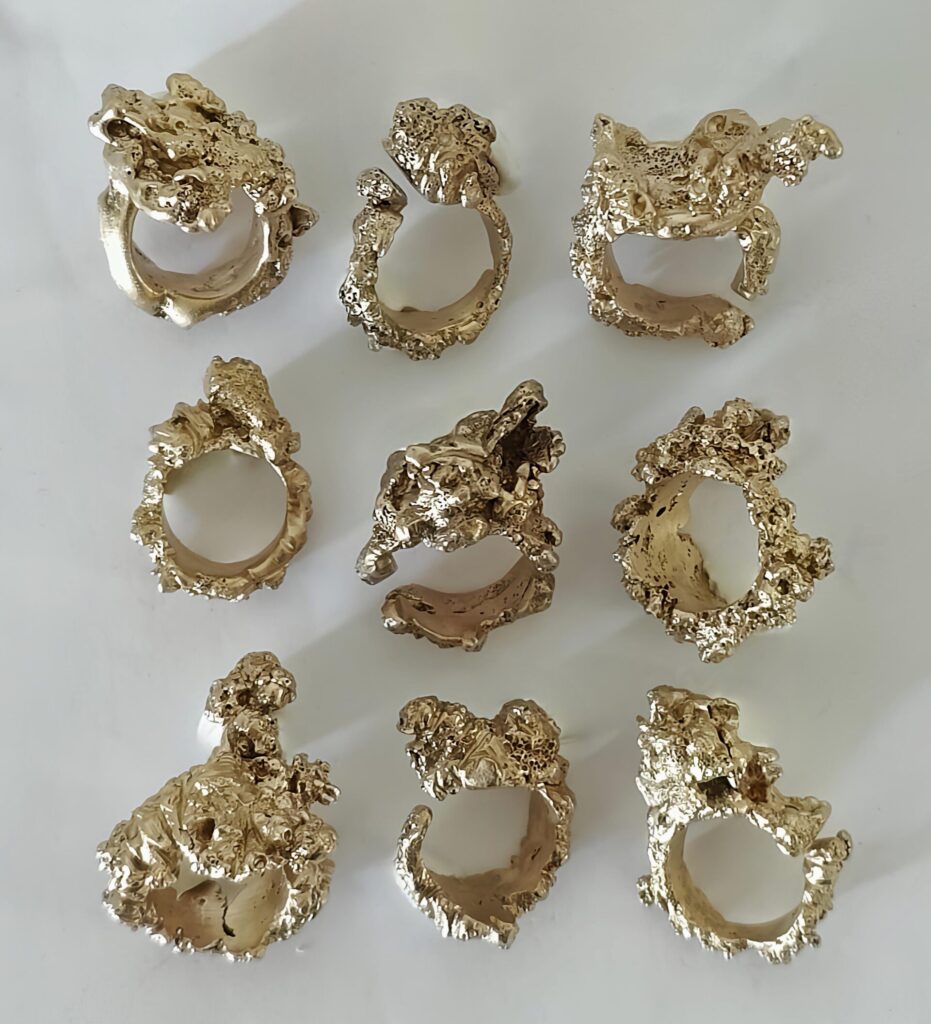
Ornament as Defence
Material: Bronze
Technique: Forms built with Ferris wax, lacquer wax, hot glue, embedded beads and wire; completed using mould-making, electroforming, and casting
Size: Various (approx. 3.3–4.5 cm high × 2.4–3.4 cm wide)
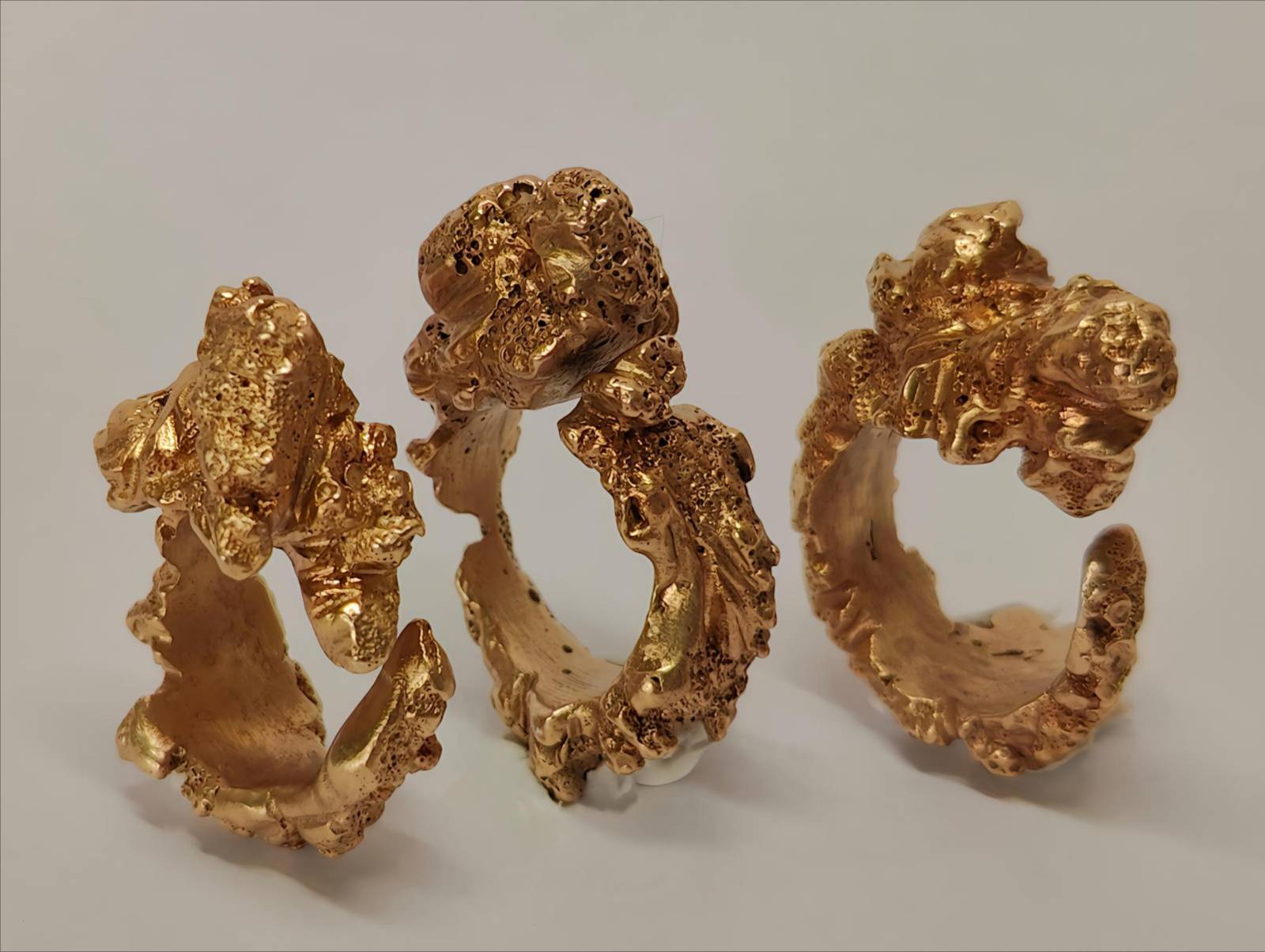
Description: These cast bronze rings are forged as wearable defences, not decorative accessories. Each piece reads like a small hostile landscape: part reef, part crater rim, part scarred terrain. Their visual language comes from corrosion, pressure, and emotional endurance, where bronze thickens, blisters, and hardens into surfaces that feel weathered rather than embellished. Sculptural in scale and energy, they reject fragility and turn ornament into topography, carrying the marks of abrasion, resistance, and survival.
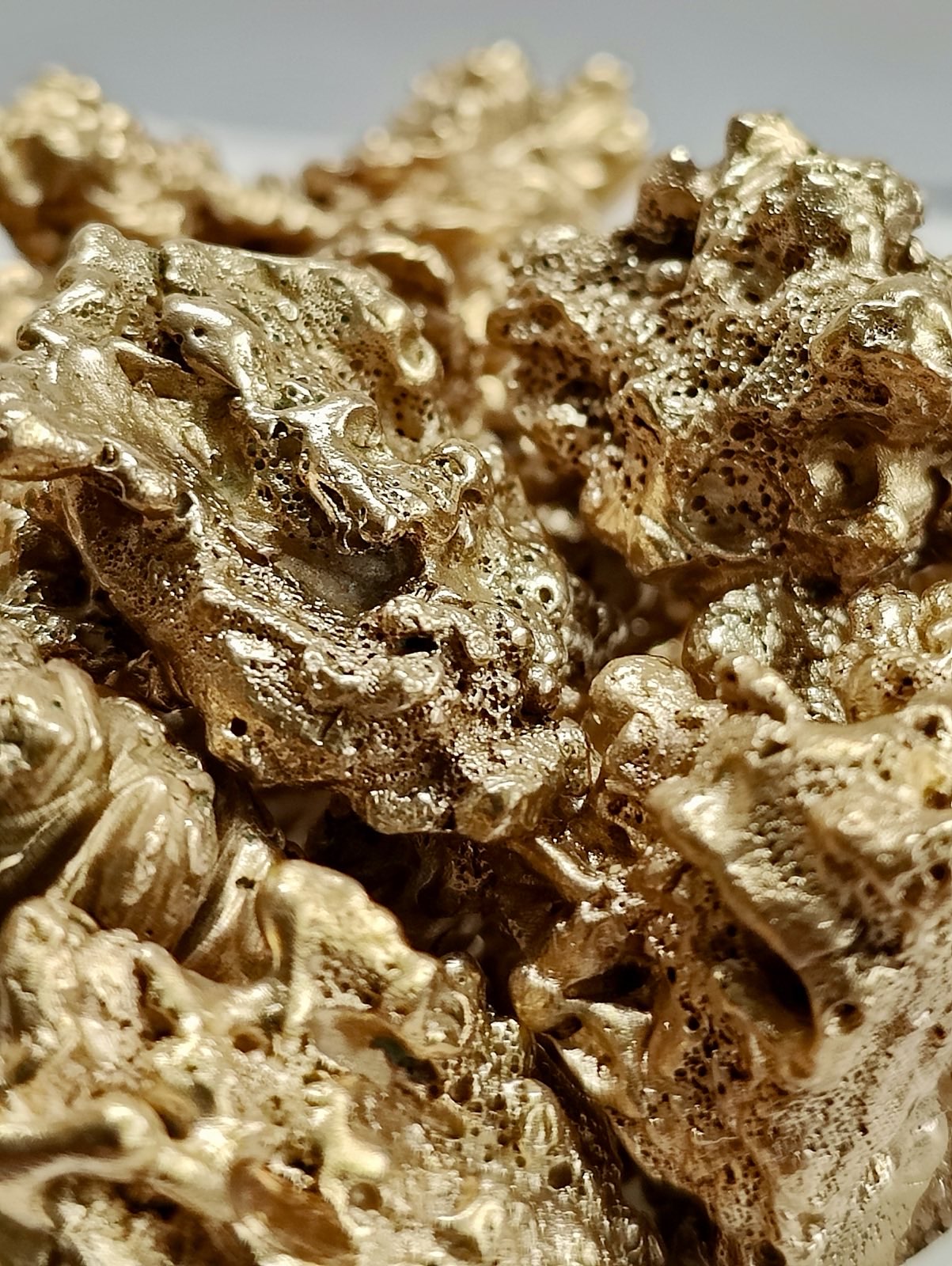
Topography of Resistance
A blistered bronze surface becomes hostile terrain. Formed through corrosion, growth, and psychological pressure, it records tactility over beauty and aggression over grace. These are not embellishments, but evidence. Each rupture maps emotional resistance, reading like scar, reef, and eroded formation at once. Ornament becomes scarred, surviving surface.
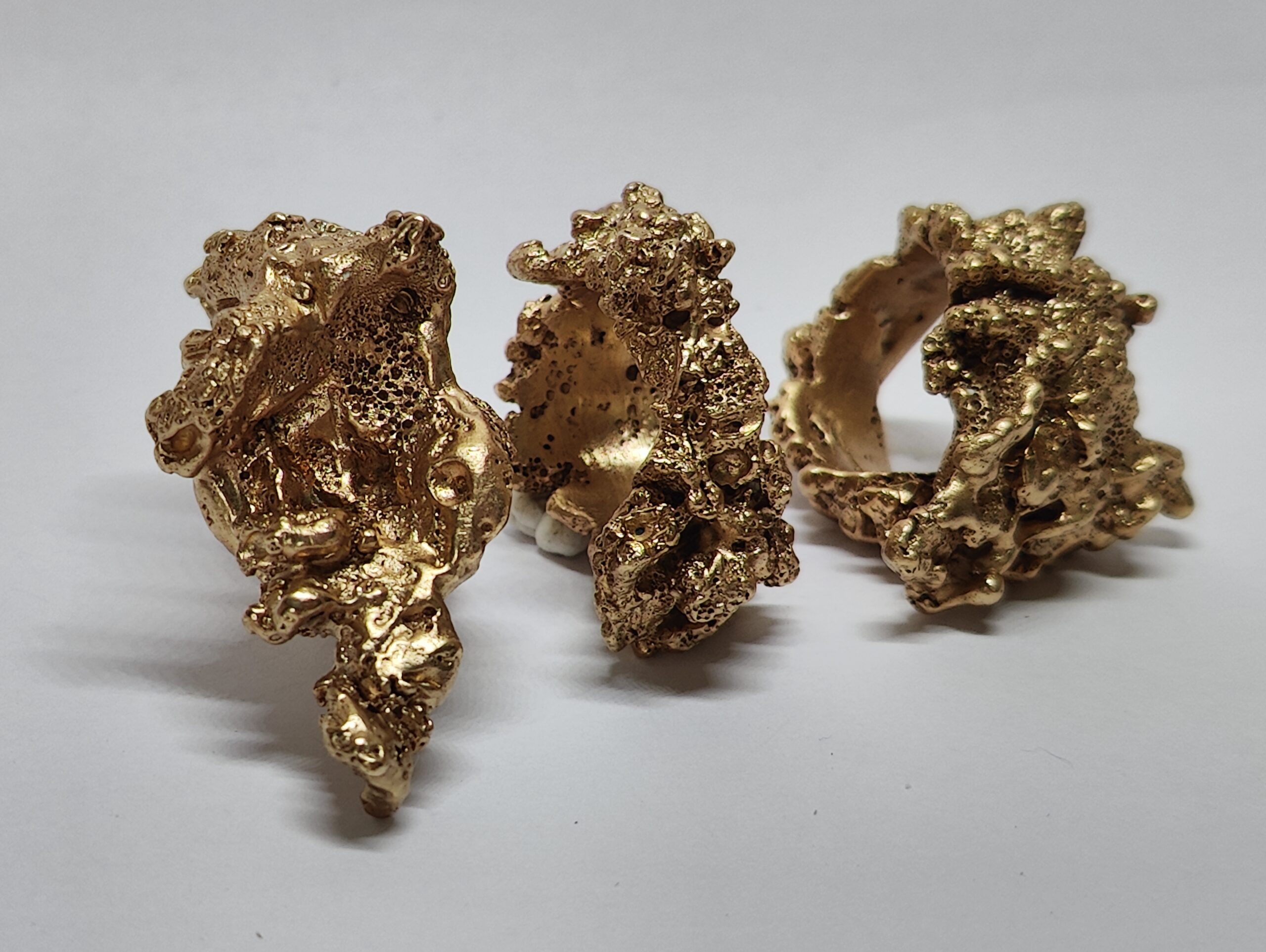
Resistance in Formation
This trio shows resistance before it settles into any single posture. Each ring carries pressure differently: one flares outward, one thickens inward, one braces through asymmetry and weight. Seen together, they read as defensive forms still in the process of becoming, where bronze records endurance not as polish, but as structure under strain.
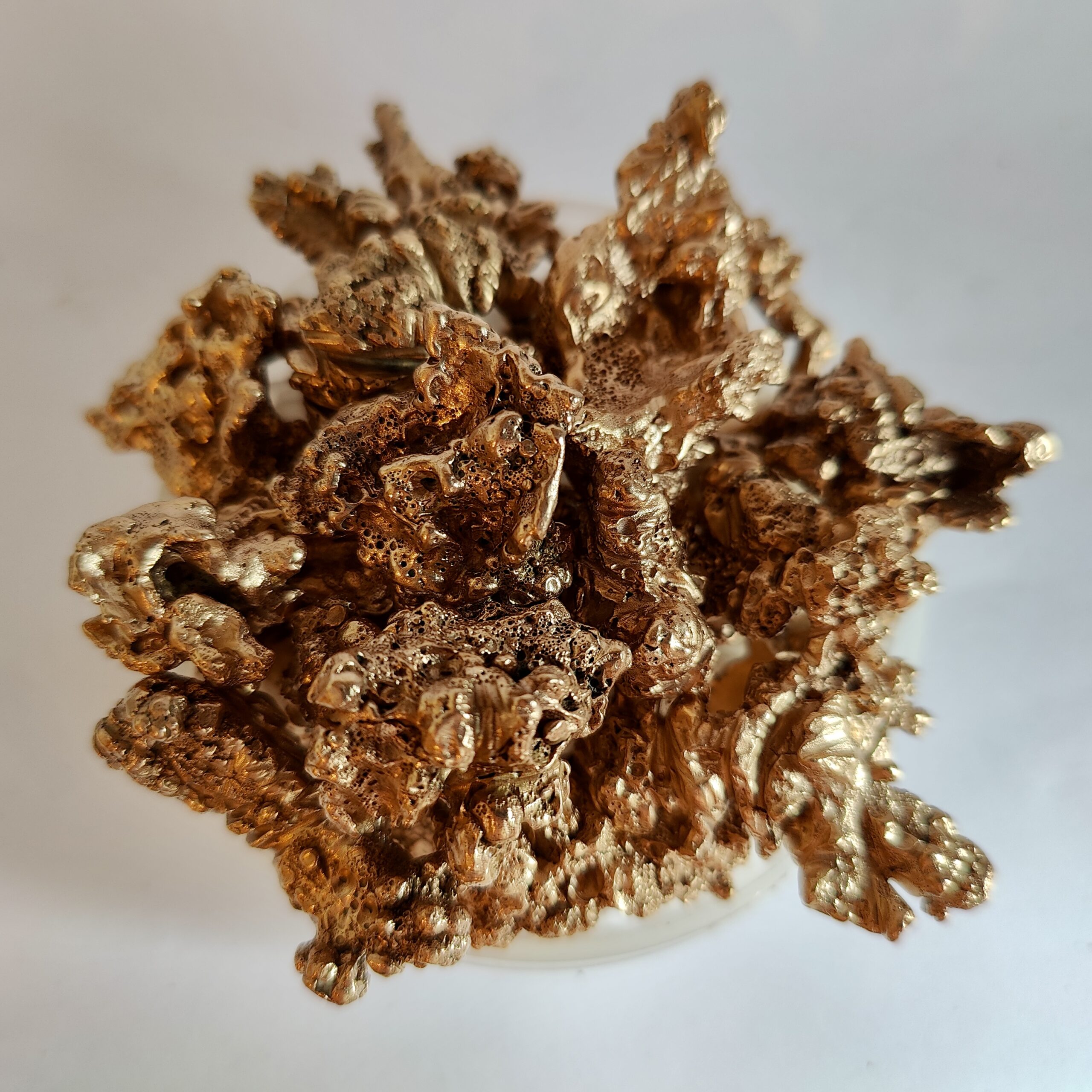
Pressure at the Crown
Bronze bunches into a dense reef of clustered thorns and calcified growth. Brain-coral logic and crown-of-thorns aggression meet here, turning ornament into a hostile ecology. The surface does not bloom softly. It armours itself by thickening, hardening, and bristling outward.
Poised Elegance Amongst Brutality
This trio offers a quieter presence. Softer forms and curved openings introduce a moment of restraint, but not softness. Placed between a regimented specimen overview and an intense macro landscape, these rings hold space through contrast. The detail is still rich, the surface still pressure-marked, but the energy is more controlled, inviting closer inspection rather than immediate confrontation. Tempering the surrounding visual aggression without undoing it.