Project Overview
A ring is supposed to make you look better. These are solid bronze and they are capable of doing damage.
There is a precedent. Between about 1900 and 1910 women used hatpins, six to ten inches of ornament, against men who followed them in the street and pressed up against them on trams. It worked well enough that Chicago passed an ordinance in 1910 fining any woman fifty dollars for a hatpin over nine inches. Milwaukee, Pittsburgh and New Orleans followed, then Hamburg and Paris. In Sydney in 1912 sixty women went to prison rather than pay the fine. Two years before that a woman had written to a Chicago paper: I always feel safe going home late at night with a hatpin available for protection.
What replaced it is keys held between the fingers, which does not work. The base drives into your palm on impact, the keys twist out of line rather than landing, they cut your own hand, and then you drop them. It is a gesture that disarms you while letting you feel prepared.
These sit in that gap. Cast solid, no hollow centre, already on the hand before anything happens, with nothing to reach for and nothing to lose hold of. I wear several at once, including a daintier one on the thumb. The corrosion does the same job on the metal that the metal does for the wearer, because a stable patina on bronze is a physical barrier that shields what is underneath and slows everything that comes after. The damage is the armour.
The title says defence because defence is the permitted word. Of people sentenced in England and Wales for carrying an offensive weapon, thirty-one per cent go immediately to prison. Of the rapes recorded by police, two point six per cent result in a charge.
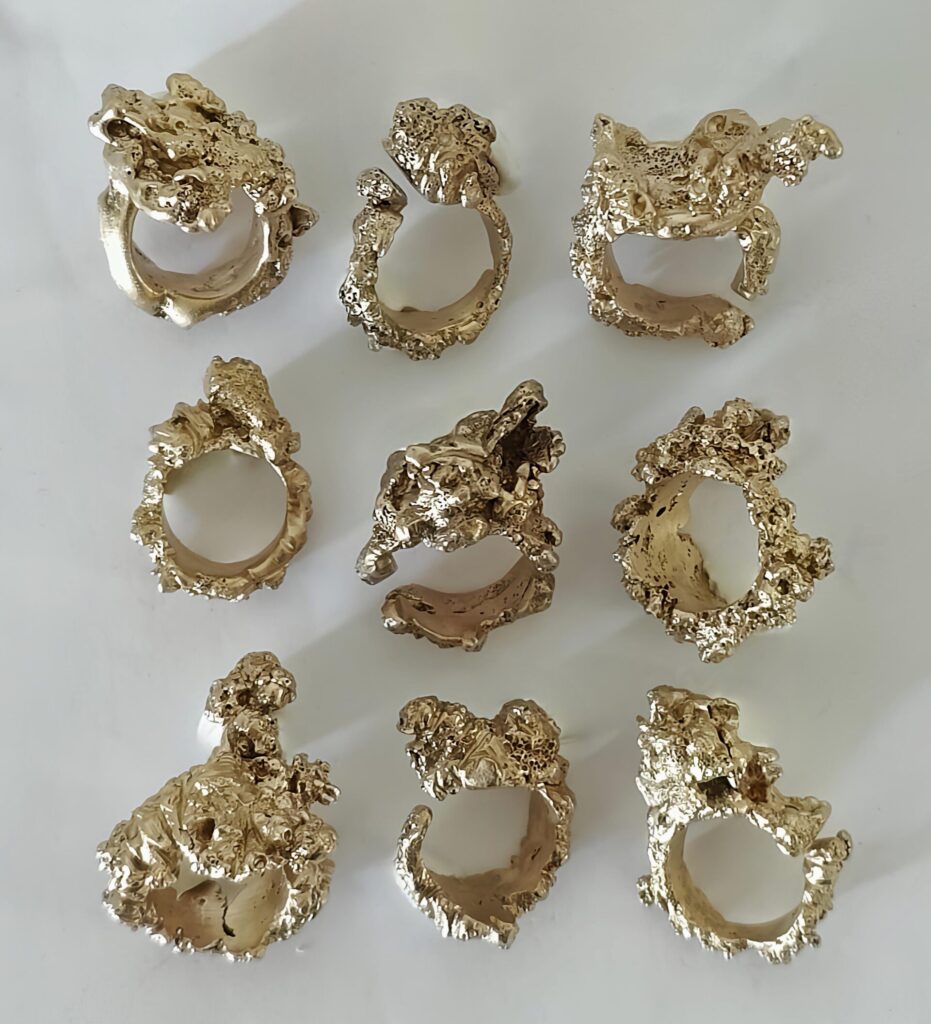
Ornament as Defence
Material: Bronze
Technique: Forms built with Ferris wax, lacquer wax, hot glue, embedded beads and wire; completed using mould-making, electroforming, and casting
Size: Various (approx. 3.3–4.5 cm high × 2.4–3.4 cm wide)
Description: These cast bronze rings are forged as wearable defences, not decorative accessories. Each piece reads like a small hostile landscape: part reef, part crater rim, part scarred terrain. Solid cast throughout, no hollow centre, and heavy enough that you are aware of it the whole time it is on. Their visual language comes from corrosion, pressure, and emotional endurance, where bronze thickens, blisters, and hardens into surfaces that feel weathered rather than embellished. Sculptural in scale and energy, they reject fragility and turn ornament into topography, carrying the marks of abrasion, resistance, and survival.
Topography of Resistance
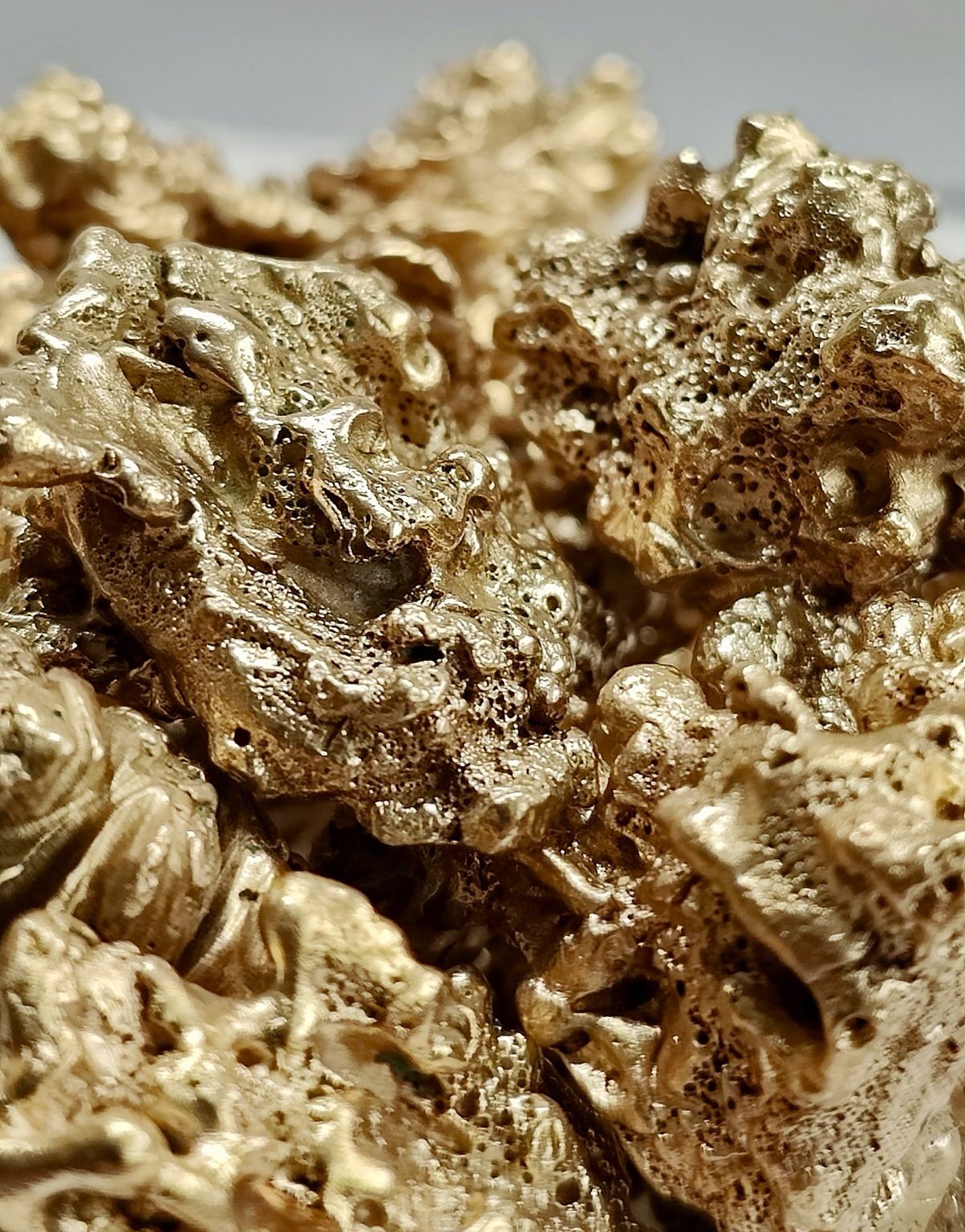
A blistered bronze surface becomes hostile terrain, which also happened to be the ground women cross to get home. Nothing here is smooth enough to glance off, just like a dimly lit sky, a lonely street and rustling bushes where there should be no wind to rustle. Formed through corrosion, growth, and psychological pressure, it records tactility over beauty and aggression over grace. Each rupture maps emotional resistance, reading like scar, reef, and eroded formation at once. The pitting and rupture that read as corrosion are also what concentrates the force, so it does not need a point to do harm. These are not embellishments, they are grip.
Pressure at the Crown
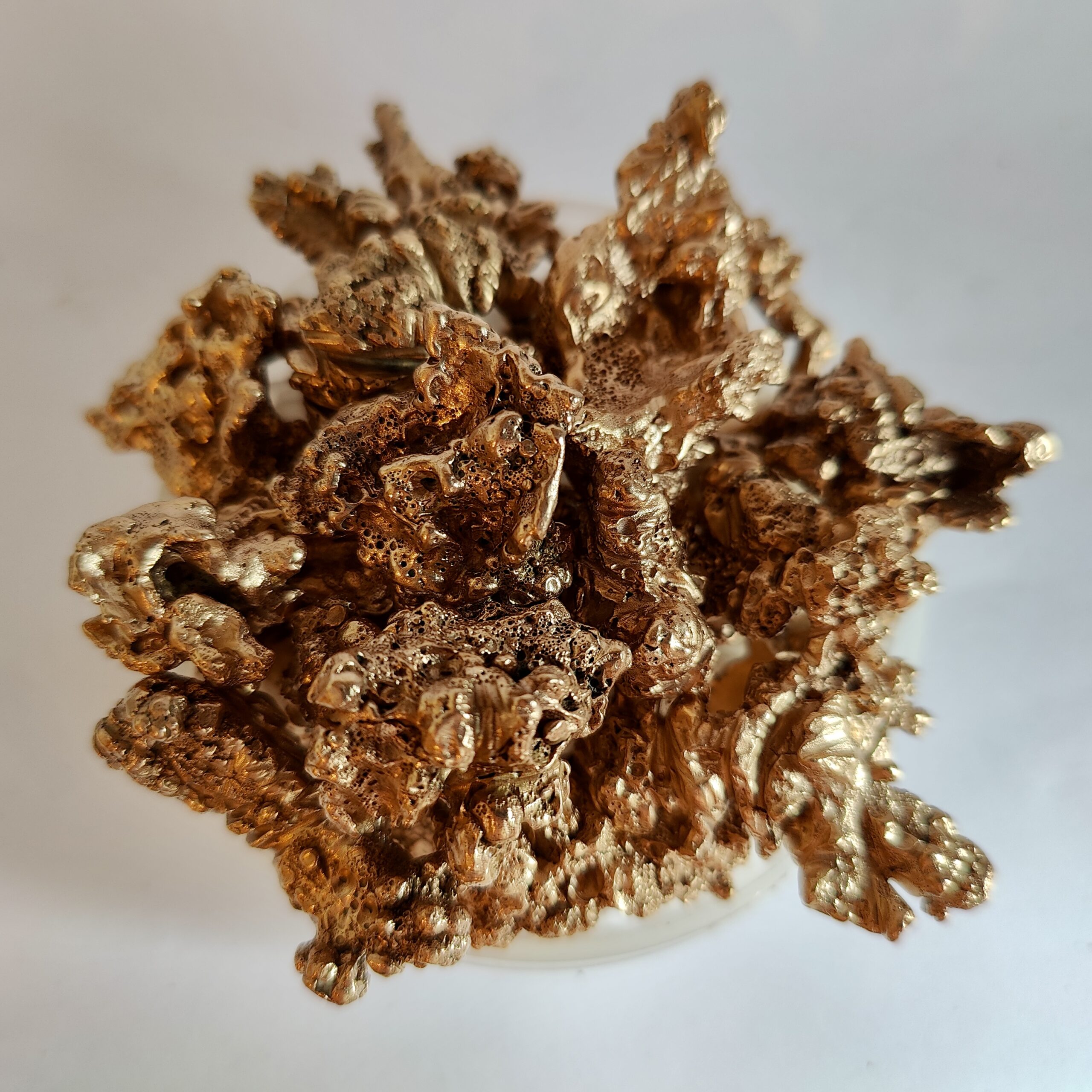
Bronze bunches into a dense reef of clustered thorns and calcified growth. Brain-coral logic and crown-of-thorns aggression meet here, which is a more pointed pairing than it looks. The crown-of-thorns is not part of the reef, it eats the reef, pushing its stomach out through its mouth and dissolving coral tissue where it sits. One adult clears ten square metres a year, and its spines carry a toxin that damages the liver. The surface does not bloom softly. It armours itself by thickening, hardening, and bristling outward. It looks like something growing on a reef and it is the thing consuming it, turning ornament into a hostile ecology.
Resistance in Formation
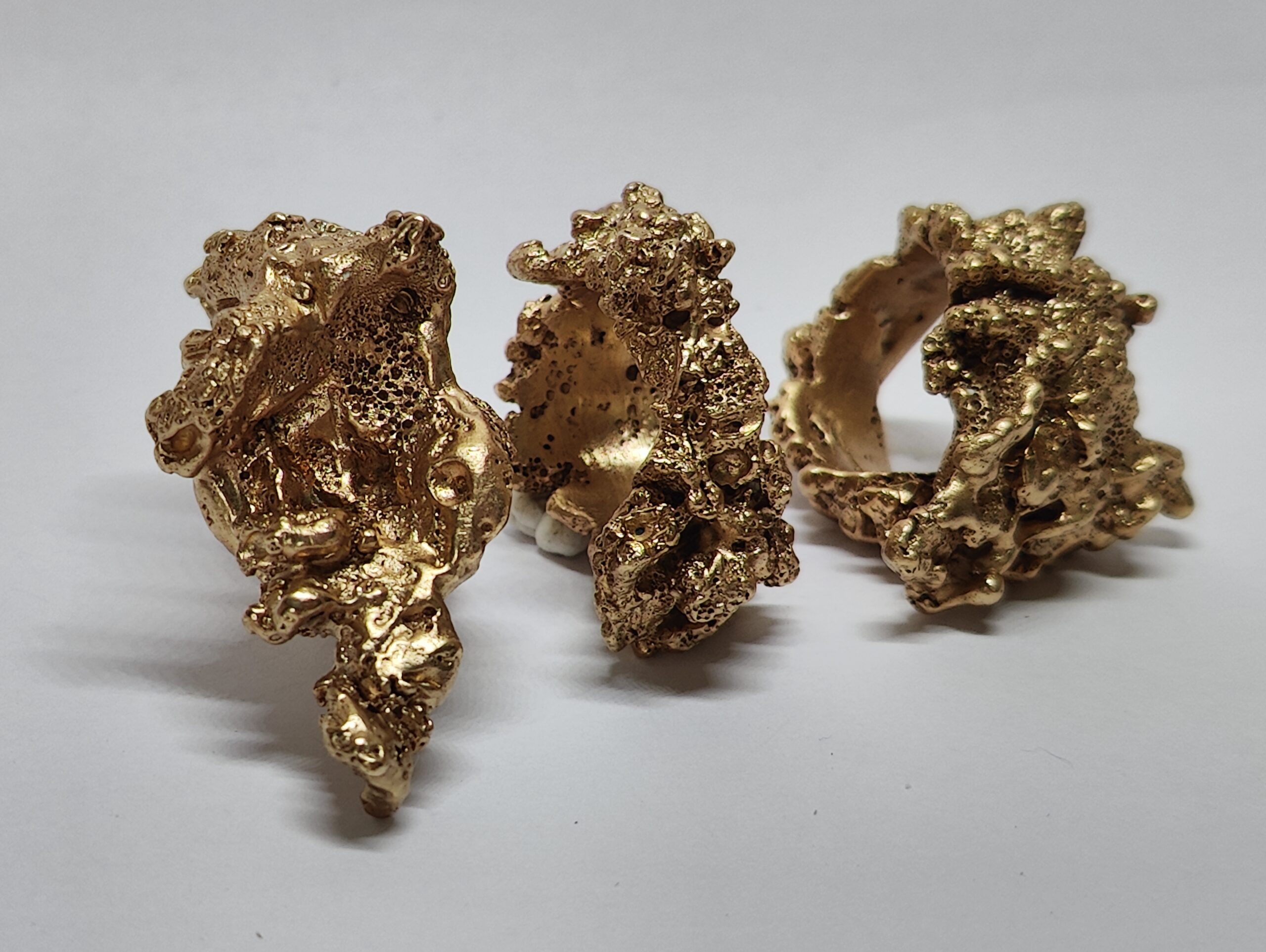
Three rings, three answers to the same problem. This trio shows resistance before it settles into any single posture. Each ring carries pressure differently: one flares outward, one thickens inward, one braces through asymmetry and weight. Worn, they sit differently on the hand and they would land differently too. Seen together, they read as defensive forms still in the process of becoming, where bronze records endurance as structure under strain.
Poised Elegance Amongst Brutality
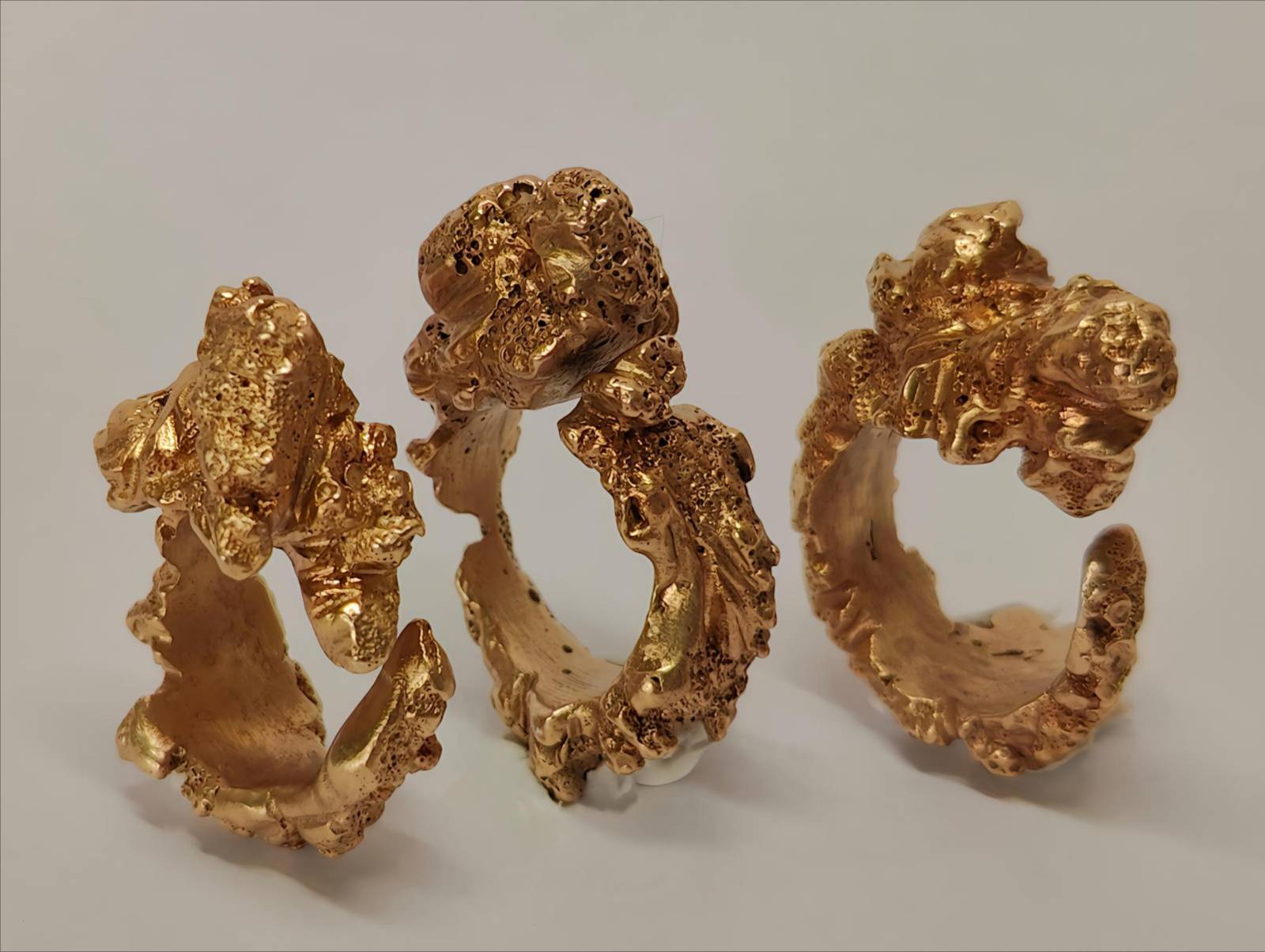
This trio offers a quieter presence. Softer forms and curved openings introduce a moment of restraint, but not softness. The detail is still rich, the surface still pressure-marked, but the energy is more controlled, inviting closer inspection rather than immediate confrontation. These are the ones that pass. You can wear them to work and nobody asks what they are for. They merely scream fashion.