Project Overview
The Sweetness of Damage gathers together three linked states of the same impulse: buried rebellion, bodily corruption, and seductive spoilage. In Acidic Ancestry, colour returns as refusal, dragged back through instinct, frustration, and acidic excess. In Sugared Flesh: Toxic core, that refusal turns bodily, where sweetness swells into tumour and delight curdles into symptom. From there, Rock Sugar Rot takes childhood seaside sugar and lets it spoil, turning ring lollies, sticks of rock, and glossy reward into something infected, excessive, and hard to resist.
The grotesque masquerades as delight. Not just visual indulgence, but infection styled as celebration, confection meets contagion. The tension between charm and decay pushes against traditional ideas of visual delight.
Together, these works ask what happens when damage stops looking like damage and starts dressing itself up as pleasure. What if decay wears a gloss?
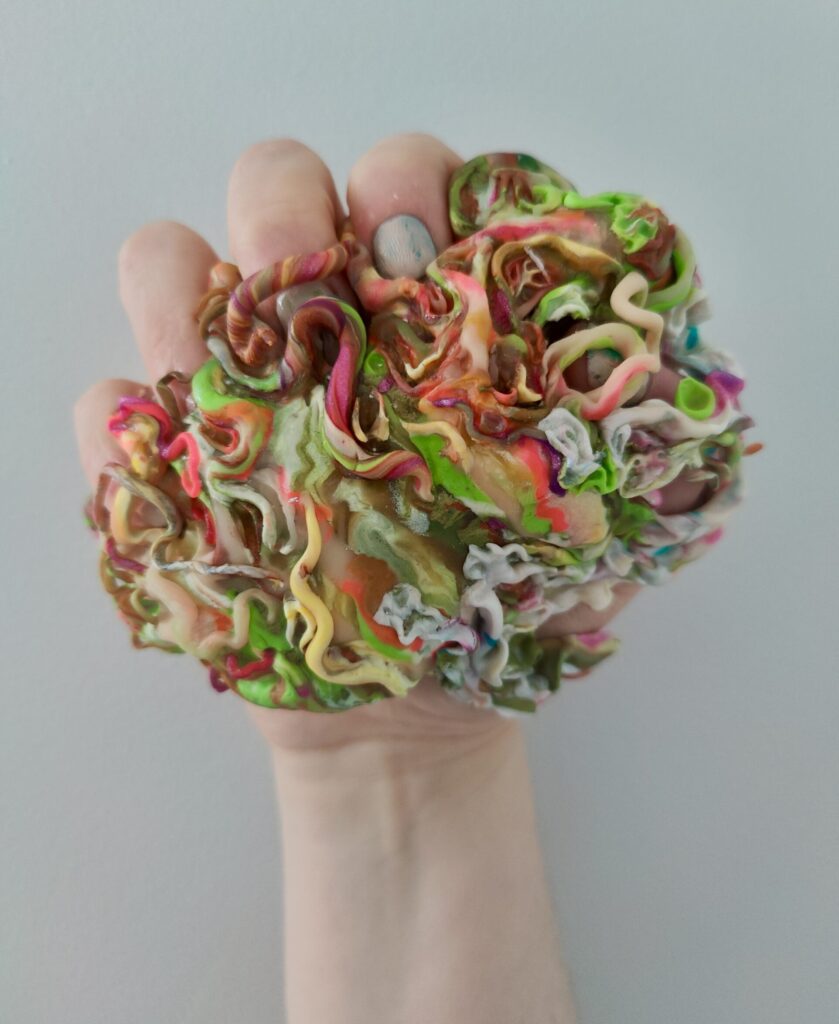
Sugared Flesh : Toxic core
Material: Polymer clay over foil
Technique: Layering, blending, marbling, caning and mokume gane; sculpted over a foil core, then sculpted and shaped by hand
Size: Approx. 11 cm high × 13 cm wide
Description: A body-worn contradiction: sickly-sweet and hyper-saturated, this candy-coated tumour straddles playful indulgence and monstrous infection. It twists the image of a stolen heart, held and squeezed to keep someone in line, into something more corrupted: not blackened, but poisoned, infected, and beginning to blister into pustule. Seductive yet parasitic, it balances allure and disgust: bubble-gum meets biopsy, dessert meets decay. Something writhes beneath the sugar. It is not just sitting in the hand, it has started to engulf. This bloom forms the heart of the system as it starts to turn.
Written Project Companion
Deadweight is a forthcoming text on psychological rot, emotional erosion, and the performance of coping. It sits beside these works as their verbal equivalent: glossy, excessive, and quietly decomposing underneath. Charm becomes camouflage. Ornament becomes symptom. Collapse is not hidden here, only dressed up well enough to pass as delight.
Excerpt: ‘To decorate your damage until it’s mistaken for delight…’
Acidic Ancestry
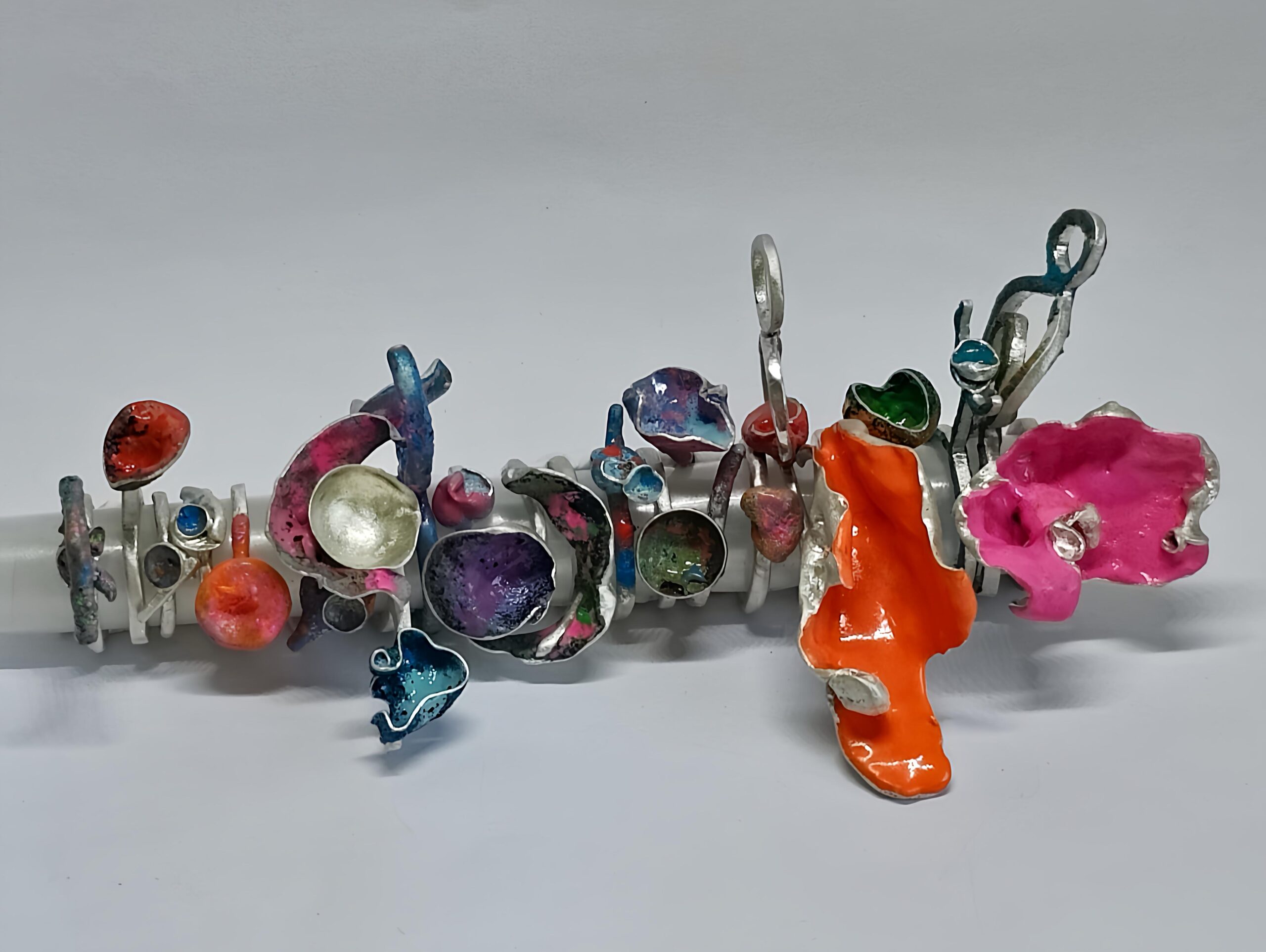
Material: Silver and enamel
Technique: Traditional metalwork: soldering, piercing, forming, and reticulation. Enamel applied by hand using torch-fired techniques.
Size: Assorted (approx. 2.5–5.6 cm high × 2–5.9 cm wide)
Description: Made when outcomes were being steered by others, these were secret works, my way of clawing back some instinct and pleasure in making. Nothing planned, just reaction: frustration made physical. They sat buried in a cupboard for nearly a decade before I dragged them back into the light and flooded them with acidic enamel, turning suppressed rebellion into something loud, toxic, and unignorable, like My Little Pony boiled alive. They are the start of the whole project, where colour first stopped decorating and began to resist.
Rock Sugar Rot
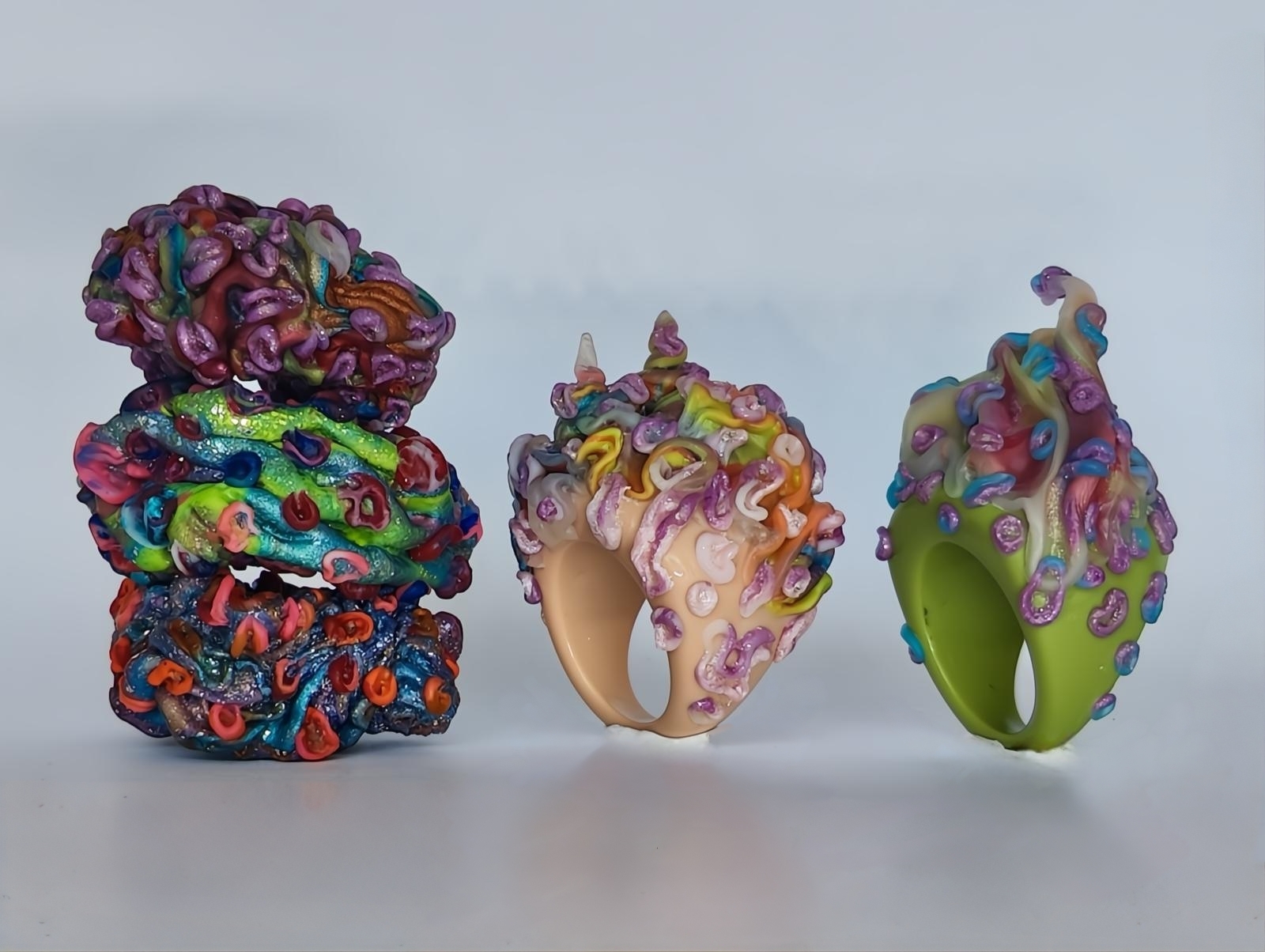
Material: Polymer clay, resin, silver leaf, wax (for moulds), and clear gloss varnish
Technique: Wax carving, layering, blending, marbling and caning; completed using mould-making, sculpting, and shaping.
Size: Various (approx. 3–5.3 cm high × 3–5.5 cm wide)
Description: This series explores bright and excessive forms that echo spoiled sweets and fleshy fungi. Part of its pull comes from Porthcawl: the ring lollies and sticks of rock that felt irresistible precisely because they were pure sugar dressed up as treat. These forms keep that same seduction, but turn it rancid. Each is playful yet threatening. The companion text Deadweight drags this further: a psychological spiral of collapse.