Project Overview
Two children were buried at Sungir thirty thousand years ago wearing ten thousand mammoth ivory beads between them. At around forty-five minutes a bead that is somewhere near ten thousand hours of work, and all of it went into the ground where nobody would ever see it again. The Victorians cut the hair off the people they had lost and wove it into rings and brooches, choosing hair because hair outlasts the body it came off. The same decision is being made both times. Whatever gets made has to survive better than the person did. It gets pressed into hands, worn against skin, kept in pockets and on shelves and in the dark, and the job is to still be there afterwards.
The reason is mechanical. The brain files an attachment as a standing arrangement, and dying does not close the file, so the hands go on reaching for someone the mind has already buried. That is the part of grief that never becomes narrative, and it runs for years longer than anyone says out loud. It shows up as the reflex reach, and as the accumulated pressure of what could not settle and so built itself, layer by layer, into something that can at least be carried.
Undulating Husk is that shape made solid. The forms started as cotton wool and clay and would have come to nothing on their own, and the copper went on over the top one deposit at a time, thickest wherever the current gathered. Something soft sat long enough to leave an impression and then got skinned in metal so it could not flatten back out. The skin outlasts what it grew on, which was always the arrangement.
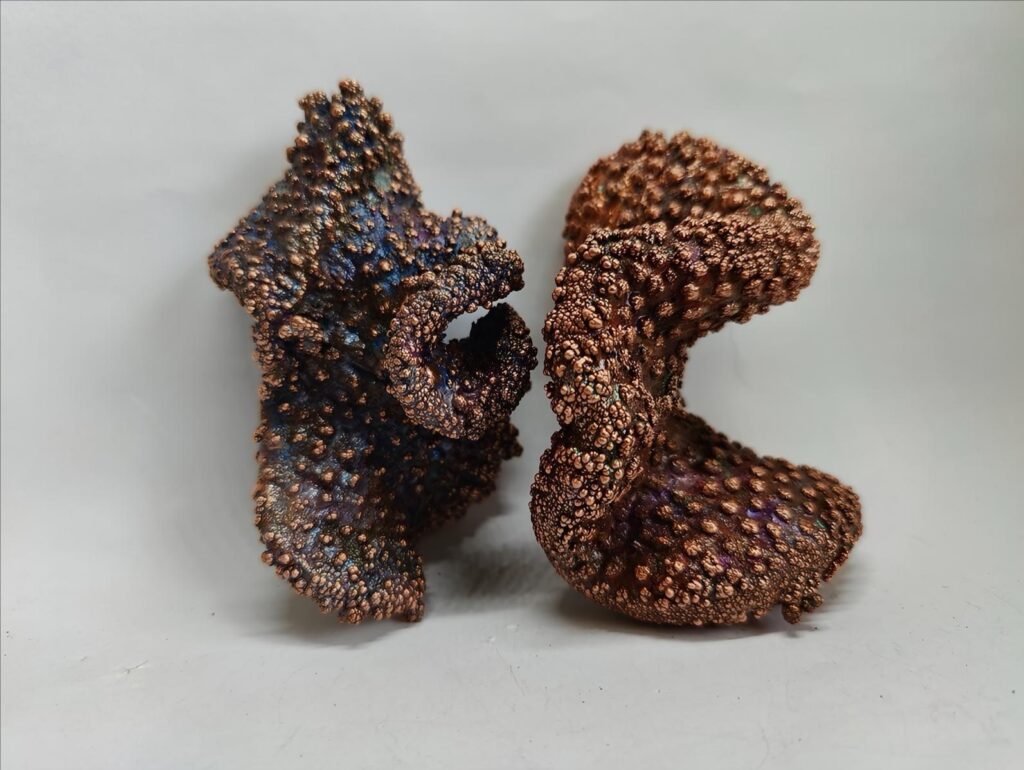
Undulating Husk : Memory Vessels
Material: Resin electroformed with copper and mica-based patina
Technique: Forms built with cotton wool-mâché, air-drying clay, lacquer wax, embedded beads and wire; completed through mould-making in resin for stronger form, electroformed and hand painted
Size: Various (approx. 4–6.5 cm high × 9–10 cm wide)
Description: Twisted forms, sized for the hand. They belong to Third Person Memory Collapse, a text in which the person telling it loses hold of the word I and starts describing her own grief as something happening to somebody else. These objects come from that point in it. They carry no likeness of anything. What they hold is the weight.
Reflex Grief: Cradled Residue
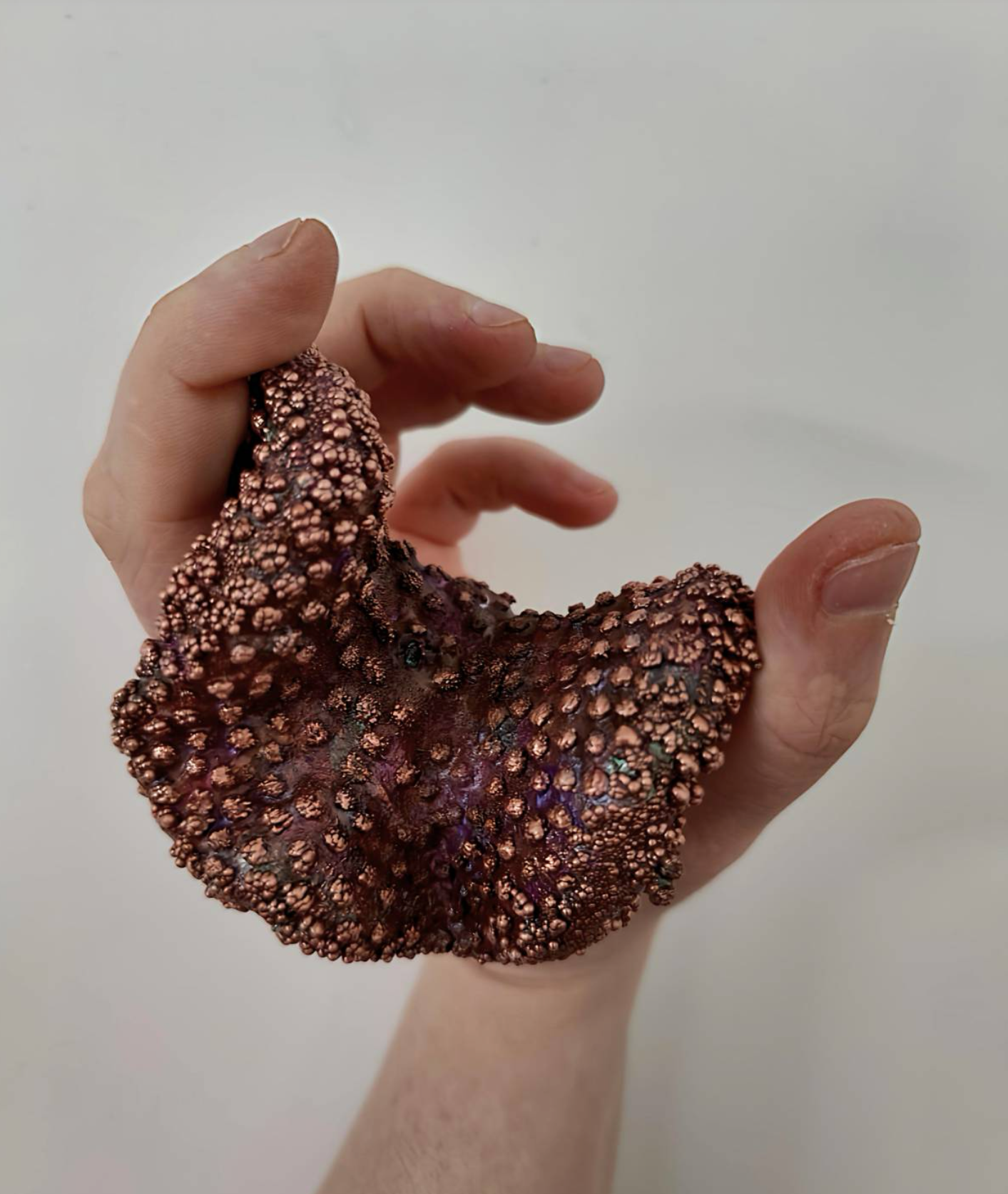
Grief arrives as routine before it arrives as feeling. You go on buying the thing they ate, folding the blanket the way they folded it, running an order of operations that belonged to somebody who is not in the house any more. The muscles hold the pattern long after the mind has given it up. This one is shaped to sit inside that grip rather than to be looked at.
Memory Trace: the routine outlives the reason for it
Pressure Archive: Nodule Field
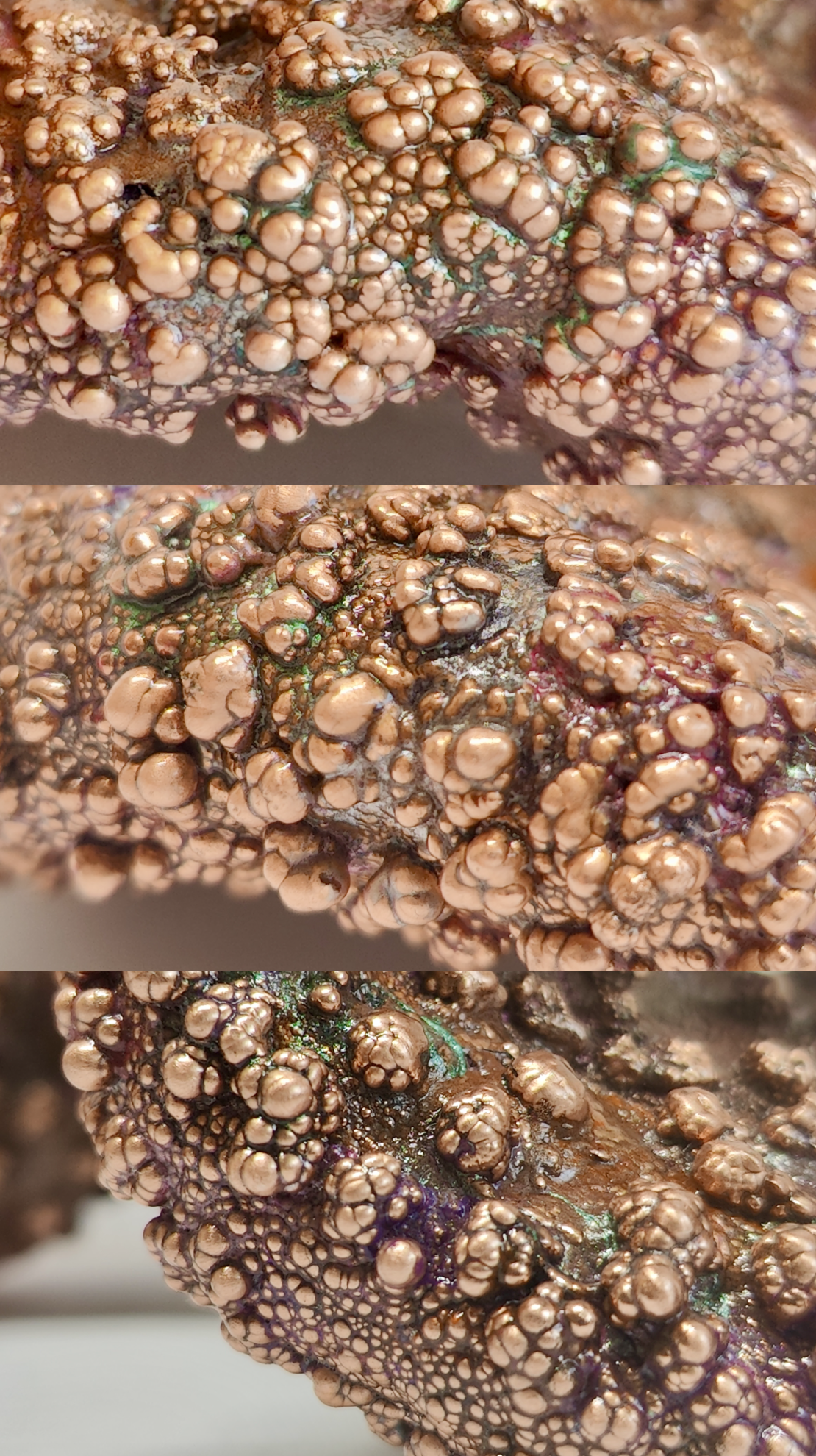
The body keeps its own version of this. Cortisol up, inflammation up, an immune system still measurably off a year after the death, all of it running without permission and none of it visible from the outside. This surface is the same accounting done somewhere it can be seen. Every raised bump marks a place where something gathered and then set.
Memory Trace: what returns first is texture, not narrative
Surface Event: Close to Breach
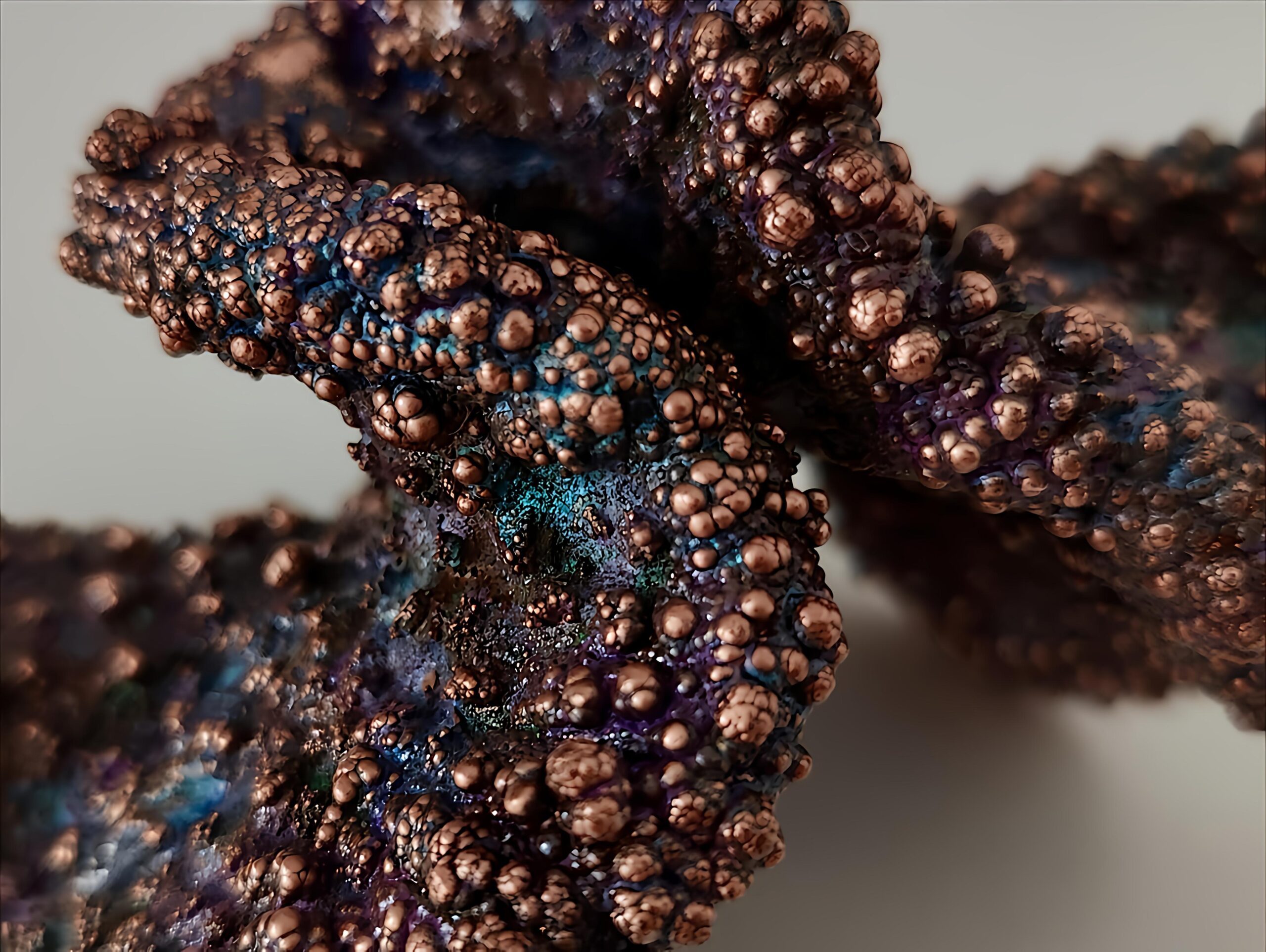
Caught mid-event, which is where nearly all of it happens. Seven years is roughly how long it goes on turning up at the doctor’s, and nobody records that stretch because nothing occurs in it. The crack that opens does not close over. It gets absorbed into the structure and the structure goes on standing with it still in there. People call that healing. It is closer to load-bearing.
Memory Trace: nothing here has finished
Sediment Skin: Aftertouch
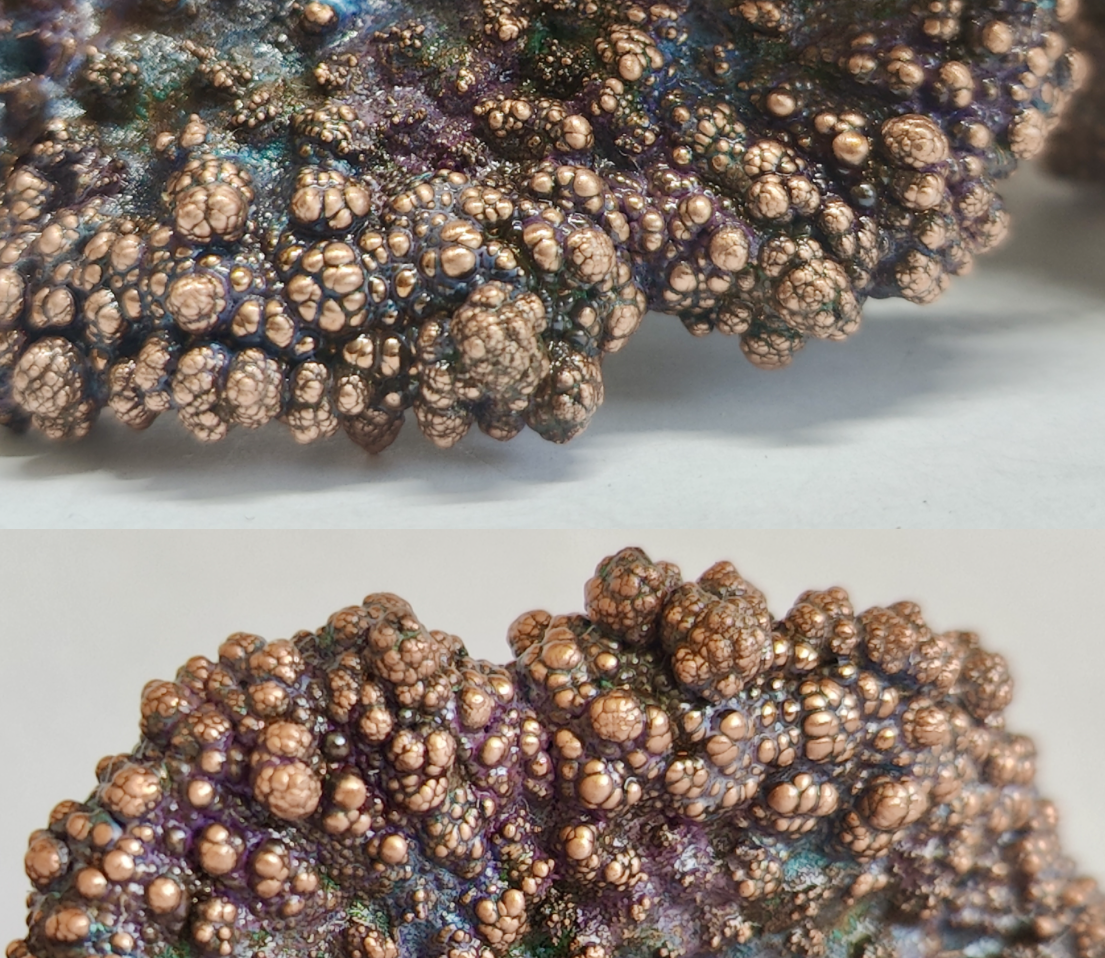
Nothing opens here, it packs in and stays. The old advice was to work through it and let go, and that got dropped because it isn’t what anyone actually does. You keep it and build it into whoever you turn into next. Me and my dad dug the dahlia tubers up every autumn, stored them through the dead months, put them back in spring. Same arrangement, done with a fork.
Memory Trace: what cannot be released settles into handling.
Breach Ridge: Bruise Bloom
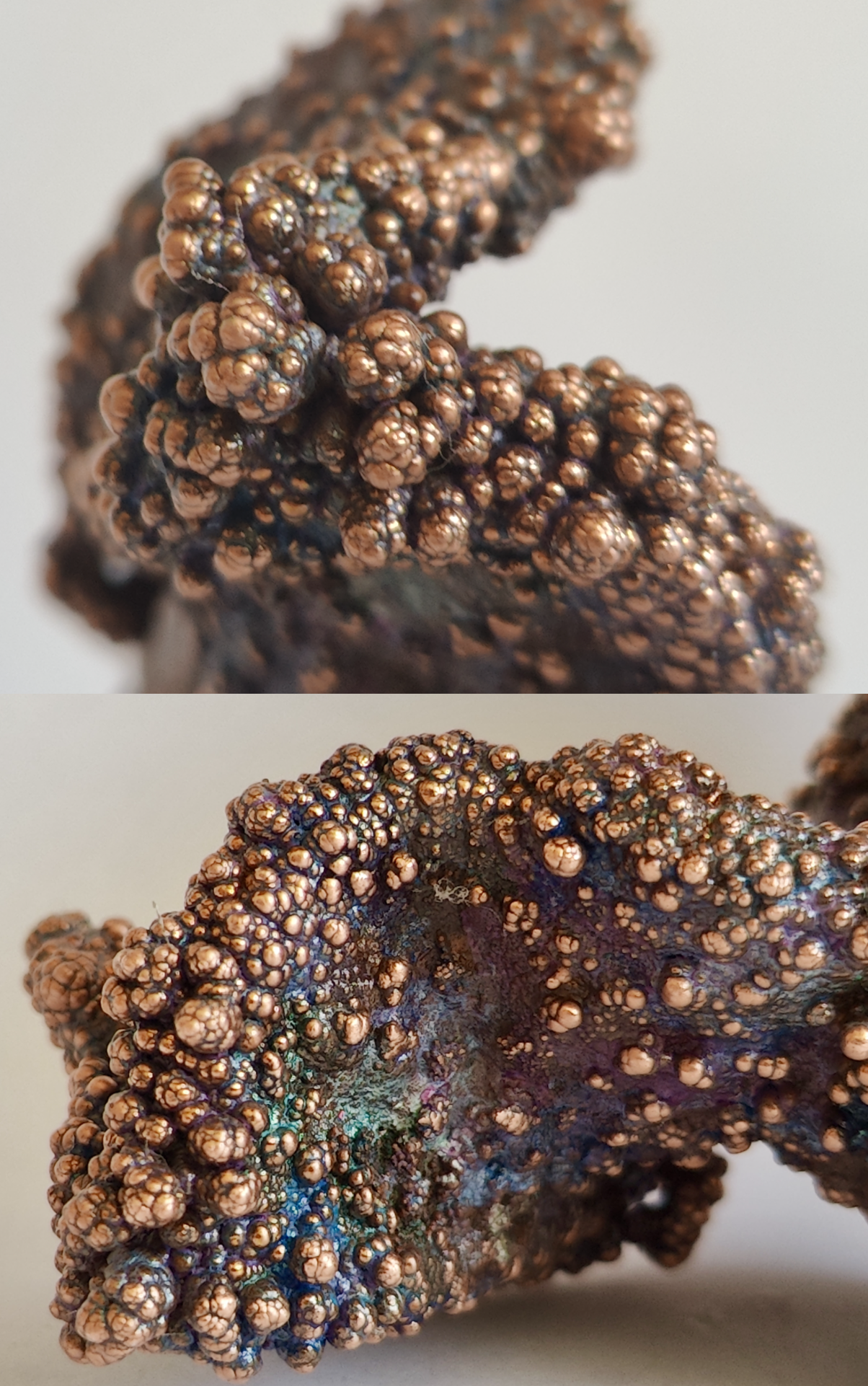
The edge looks like the weak point. It’s the opposite. The current runs hardest at edges and peaks, so this ridge took the heaviest deposit on the whole piece. The colour only exists at an angle, mica doing what a near-black dahlia does, red or purple in one light and gone black in the next. The most exposed part is the most armoured.
Memory Trace: what looks like the breach is where it’s thickest.
Written Project Companion
Third Person Memory Collapse is a forthcoming text on grief, memory, and dislocated identity. It sits beside these forms as their verbal equivalent: unstable, fossil-like, and quietly deformed by recall. Memory does not return cleanly here. It shifts pronouns, alters sequence, corrects itself mid-sentence, and turns the speaking self into someone half-recognised. This is not healing. It is memory under pressure, stabilised just enough to take form.
Source Companion
A second companion text sits closer to the originating loss behind these vessels. Where Third Person Memory Collapse tracks the distortion of memory, this text stays nearer the event itself: the body, the aftermath, the carried routine, and the moment grief first entered form. It is less about recollection than rupture.