💎👑 From common as muck to the Royal College of Art 🤯
From common as muck to the Royal College of Art. Support my MA journey in Jewellery & Metal. Crowdfunding tuition for an accepted student bridging working-class roots and elite art education.
I’m a jeweller and metalsmith from South Wales. I make work about corrosion, endurance, and the kind of beauty that grows out of damage rather than in spite of it. I’ve been accepted onto the MA in Jewellery and Metal at the Royal College of Art, one of the most prestigious art schools in the world, starting September 2026. First application. First try.
The course costs £17,000, and I don’t come from money. I grew up in council housing. My dad was a steel fixer; my family were steel fixers, coal miners and rail workers, and no one before me went into higher education. My father died while I was sitting my GCSEs. Getting here has taken years of self-directed practice, years of caring responsibilities that put my own life on hold, and fighting my way back to the bench every time circumstances knocked me off it.
I want to be straight about where I am financially. Right now I have no savings and no income, and I’m dependent on my partner for basic living costs. That isn’t where I started. I had saved my first tuition instalment. Then a series of crises last year, including family deaths and serious mental health strain among family, took the money I’d put aside, and it’s gone.
The house is part of this. At one point we were all told the gap between people and a home of our own is a matter of skipping the daily coffee and the avocado on toast. People got very angry about this and called it bullshit and out of touch. But here’s the thing: at the small scale, that’s true. Every sandwich and coffee from the shop was ten to fifteen quid, and I cut all of it. These are the luxuries the big corporates train you to want and to feel entitled to, and you’re not, and you don’t actually need them. So I filled my own mug before I left the house and took my own sandwiches, and it saved me money. I saved hard. But what years of that discipline actually bought me wasn’t a flat in London or Surrey, where my partner is from. It was a £5,000 deposit on an ex-council house in my hometown, with a bit to spare to furnish it, and only there because I’d already come home to care for my mum. If I’d been able to stay in London or Surrey and try for the ladder there, the entry price back then was a deposit nearer £30,000. Skipping unnecessary luxuries like coffee you can easily make at home gets you closer to your deposit. It does not get you the £30,000, though arguably I hadn’t been saving for overly long. Coming from a council background, you don’t tend to think long-term. I don’t know anyone growing up who talked about investments, stocks and shares, or pensions, or the importance of keeping on top of them. That wasn’t our education. Our education was: the money you have now gets you to tomorrow.
Anyways, when my partner was offered a job elsewhere we moved for it, and with everything else going on I couldn’t afford to keep paying for my property and rent somewhere new at the same time. So for one year, one time, I let it out, out of necessity. That single tenancy is what wrecked it: the tenants spent an entire South Wales winter not reporting damp and mould, and by the time it surfaced I was facing major structural repairs I’m still dealing with. In Wales, rain isn’t a suggestion, it’s a way of life. What the house didn’t take, the crises did.
I’ll write properly about what that year was like another time. For now the short version is: I’m not a landlord, I’m someone whose one attempt to keep a roof over both ends of a difficult year cost me the roof, the kitchen and the savings both.
I’m eligible for postgraduate Student Finance Wales, but that’s for living costs, not tuition. Without funding the fees directly I cannot take up the place. I’ve applied for RCA scholarships and I’m hoping there’s a horseshoe somewhere about my person, but they’re highly competitive, and I’m preparing to defer if it comes to that. Really living the dream.
I haven’t sat still. I’ve planned around student finance and applied to a number of craft bursaries. One fell through when funding for metal craft was pulled, but they all rang the same bell in the end: they want references from established people in the industry who can vouch for your skills. And that’s the catch. These bursaries and scholarships claim to be for entry-level makers, even independently trained ones, but you can’t get the industry references without already being inside the industry. So you basically have to be privileged to apply for the funding that’s meant for people who aren’t. Organisations set up to support makers without privilege end up gatekept by the very thing they claim to remove. That argument’s for another time.
Which is exactly why support here matters. Ideally, any part-time work I take will be directly linked to the skills I’m building, or new ones I want to build, in an industry I’m desperate to be part of. Any GoFundMe support helps me dodge falling into retail or an office, where I can’t hone my craft alongside a master metalsmith or a team of fellow makers. I’ve spent years as a carer, years restoring this house with my own hands, raking out mortar and repointing it, and years playing with knives and wax to make jewellery. Those aren’t the years that build a corporate CV. They’re the years that built a maker.
The RCA doesn’t come around twice. Some people spend years trying to get in and never do. I put off applying for years, convinced my work wouldn’t get past round one, and then it did, first time. This MA isn’t a luxury. It’s access to specialist facilities, professional-level training, serious industry connections, and time to build a body of work that could actually sustain me long-term. The goal is a proper practice, run as a proper business. And yes, I’m well aware I could have applied for a cheaper course. But every masters is £10,000-plus, and the student finance maths means that whichever way you cut it, you go broke. Masters study is built for the middle class, and the loans dress it up to look doable for the rest of us. ‘Look at us, funding poor people through masters degrees’. The reality is the money does very little for your ability to actually live. Universities fees gobble it all up.
There’s a bigger point underneath all this. The contemporary jewellery trade is built around makers who can afford to work in silver and gold, and clients who can afford to collect them. Rising material costs push experimentation out of reach for makers from backgrounds like mine, and the skill set drifts away from people who can’t afford to buy their way in. At the RCA I want to do the opposite: to extend my practice into silversmithing in precious metals, working in Argentinium silver alongside a personal reserve of scrap gold, putting a reclaimed silver surface next to copper, or a hand-cast gold finding against a corroded bronze form. I’m interested in why value gets attached to rarity or cost rather than to skill, narrative or meaning. But I’m not interested in working solely in silver and gold and pricing a substantial amount of people out. I’m interested in creating things in base metals and getting them gold or silver plated, and seeing how that fares against something that has had silver and gold attachments or features to it.
Working-class hands, elite institution, no safety net.
— Written by the one who saved it, lost it, and asked anyway.
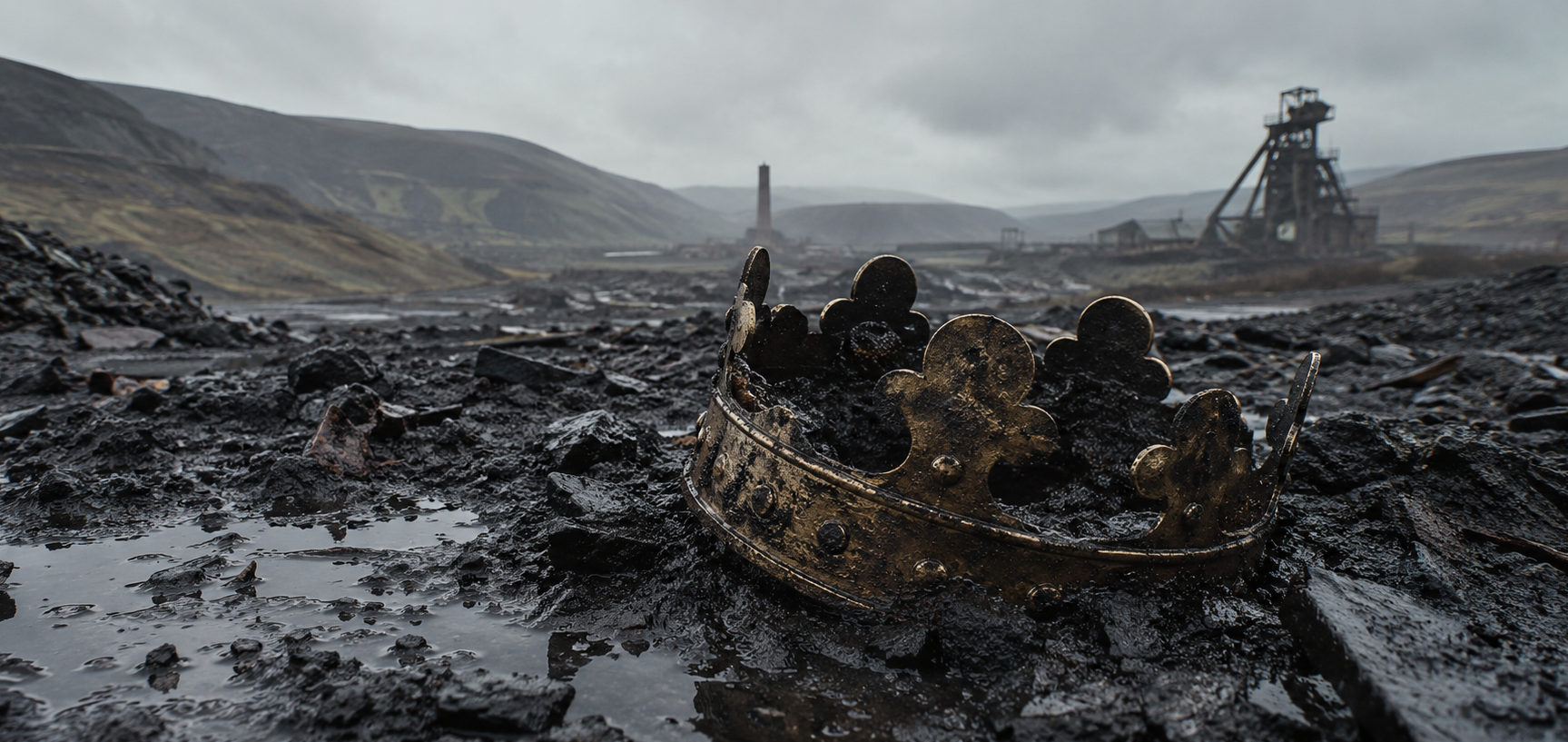
My work, made under the name Corrode & Crown, is about what survives pressure. Cast bronze rings built to read like hostile terrain. Enamel work dragged back from a decade in a cupboard. Forms that refuse to be decorative. If you want to see what I make: corrodeandcrown.com
If I get there, I’ll be hopefully documenting the whole thing: projects, process, and the reality of doing an MA at the RCA as someone who genuinely had no business getting in. It’ll all go up on the Corrode & Crown site as I go.
I’m asking for the chance to do the thing I’ve worked toward for years, that I’ve earned a place in, and that a sequence of genuinely awful circumstances has put just out of reach.
Every contribution, and every share, means something.