🥀🖤 Rot With a Witness
Nothing is ever purely dark. Even grief glints, if you tilt it.
Written while I was in Sweden, thinking about grief and gardening and an old journal prompt: what do the gardens of your childhood say about who you are now.
There’s a small dahlia park near where I was living.
Park is generous, mind. Eight beds shoved together, propped up by the most half-arsed collection of support sticks I’ve ever seen. Crooked, splintered, like the gardener gave up halfway through and thought, aye, that’ll do. It’s very lagom, just enough effort to tick the box, not enough to lift it out of the kind of shit category. Lagom isn’t modesty; it’s cowardice dressed as taste. It’s the aesthetic of a people who fear to be seen to want. Every stick stands straight but holds nothing. It’s the kind of order that calls itself virtue because it’s terrified of passion.
My garden snob is showing.
And yet.
Amongst the shabby props and the weeds, there are dahlias still pulling it off, big-headed bursts of colour, streaked petals catching the last of the sun. Mostly whites, yellows and pinks, fairly common colours, some bruised purples and peachy oranges thrown in. No unicorns, just the usual palette trotted out on repeat. I’ve always loved the colour richness of plants. I have so many favourites for so many different reasons, but one stands out: red. The deepest, darkest red I’ve ever grown.
Me and my dad grew one at home in the noughties, every year. Dig it up, store it till next season, replant that mother the first chance you get, same ritual every year. It was the closest we ever got to a true(ish) black dahlia. No such plant really exists; black is actually deep shades of purple, maroon, or burgundy that appear nearly black. But the goal was always the same: find one that in the right light showed red or purple, but in shade or dusk blackened as night. Nothing is ever purely dark or blackened. Even grief glints, if you tilt it in the right direction, silver lining and all that shit. We pretend darkness is a final state, but it’s just colour starved of light. That’s what memory does: turns shade into shape. That’s why they carry the mystique. Back then, before the internet was more than a loading screen, finding a dahlia with those properties was like chasing a myth. Still on my to-do list. Still haven’t found one, not looked very hard admittedly. I’ll find one eventually, maybe when I stop using my garden as a dumping ground for my house renovations and bench work. Also want to grow ginger and wasabi, but that’s another story.
This little park, though, it deserves more love than it gets. Funny how a council estate back home had flower beds with more care in them than this designated ‘green space’ in the holier than thou Sweden, now being trampled by unruly fuckwit kids while their arsehole parents scroll themselves into comatosed oblivion, with attention spans shabbier than the flower beds themselves. I guess if I try really hard enough I can find the lining; someone still used support sticks. Badly. But what happens to that park when the last person stops bothering to make even enough effort to pass it off as lagom? Well, it ain’t worse sticks. It’s worse. Nobody shows up to witness it all turn to mulch. Decay with someone watching leaves fingerprints, evidence. But decay with no one left to watch is just waste, binned, chucked out before it finished turning into whatever it was going to be.
When I was a kid, flowers were always squeezed in amongst the fruit and veg in the back garden built up beds. Council estate soil didn’t give much, but dig deep enough, feed the soil enough and you can make it work. Runner beans, spring onions, strawberries, radishes, cucumbers, garlic, herbs, all crowded together with bulbs and tubers tucked between them. Bulbs were our favourites. You can dig them out, dry them off, store for next season and have fun rearranging everything over and over again, and if you’re really lucky you might get a little bulb or two thrown off the parent plant.
Oversized, misshapen, strangely coloured, it didn’t matter. What counted was whether you could coax it to grow. That was the whole point, a little cruel ass test from mother nature, you come out a winner and get branded ‘green fingered’ or you get slummed in with everyone else who tried and failed, ‘ah you just as incompetent as me, I blame the soil’. You tried, it died, you tried again. Green fingers were something you proved season after season. My dad had it, for a while. Then he didn’t. Leukaemia will take that from you as well.
He gardened like someone reading a language very few care to learn. When he dug, it was conversation. How the soil’s texture felt, where roots were growing, how well it seemed to drain, whether it had a good supply of little critters taking up residency. Illness takes the conversation first. Leukaemia doesn’t respond to any of it. You can’t dig it out, feed it, coax it back, none of it works, and you’re stood there with your hands empty. Present and useless. Watching, not fixing, you’re not capable of it. Which leaves a question I’ve still not properly answered. If care can’t save anything, what is it actually for?
My favourite flower days out, then and still now, though I get to them far less these days.
Rhossili sunflowers, all bowing towards the sea. A gold tide of creaking heads waving as the wind runs through them. The air thick with pollen, chalky on the tongue. Rows of stalks like the yellow brick road got confused as fuck where to go and started climbing the walls, regimented but never truly straight, organised chaos reigns. It’s beautiful and faintly oppressive all at once, the weight of inevitability pressing down. Every year the same truth hangs over it: the golden carpets rise to almost head height, fill the air with life and an unmatched earthy scent, then collapse. Not all at once, slowly, bit by bit, petals first, then the heads wilt, stalks bend and then seeds fall, and get carried by the wind if not eaten by the birds first, or more likely when it comes to Rhossili not carried off in people’s backpacks. It’s a drawn-out undoing that demands return visits if you want to catch the whole story. Heads bow, the fragrance fades, the seeds fall.
The flowers didn’t plant themselves. A council scheme, maybe. A summer volunteer rota. A conservation scheme when people actually cared. Somewhere, someone or ones bent for hours to make it look effortless and completely walkable with weaving little paths that lead into different flower bed sections via wooden gates. Beauty, with a shift pattern.
Pembrokeshire poppies, near Tenby, smaller fields I think, been a long time since I visited, but striking. The shocking red against coastal green was stunning and aggressive for such a delicate plant. These fields gave me paint the roses red energy, and ‘The Hills Run Red’, which is a much weirder reference to reach for, though if you think about what the poppy stands for it gets less weird and a lot sadder.
Then there was the lavender in Gower, sharp blades of confined flower heads, heavy scented to the point it was almost too much even in an open space, it was so relaxing it was sleep inducing. It rivalled my nan’s living room for different reasons, hers was heavy with tobacco smoke soaked into the curtains. One intoxicating, one suffocating, both burnt an impression in your nostrils that was unforgettable.
But what comes after matters so much more than what it gets photographed for.
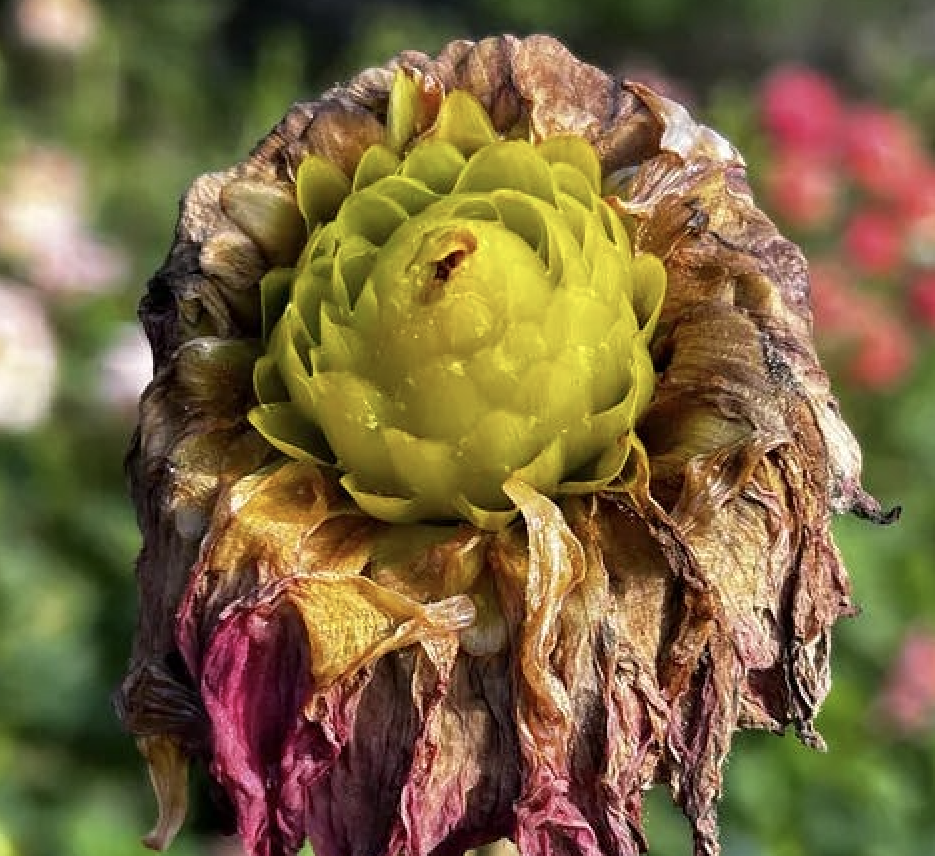
The rot begins quietly, the stem softens, the colour bruises from the inside out, some cells swell in the winter months beyond capacity, you know the drill, shit’s getting ready to die. But you don’t always notice the end until you touch it, and it collapses. That’s when you see the truth of it, structure surrendering to weight. As days shorten and the weather turns, flowers start their decline. Petals drop, stems bow, buds collapse into slimy wrecks under autumn rain. Leaves dry, veins darken, until what’s left looks antique, fragile, faded into beauty by time.
Not tragedy, just inevitability. Watching flowers age is like watching memory itself collapse, slow, uneven, but unstoppable. My uncle’s heart attack, my dad’s remission cut short by the transplant meant to save it. Both went the same way as the petals: beaten down, stripped back, reduced until only fragments remained.
And what fragments stay, stay stubborn. They don’t heal. They just sit there. Fragments ask to be carried, not repaired. You learn to live among them, careful not to mistake them for wholeness. Every object becomes an accusation, every season a reminder that nothing is finished.
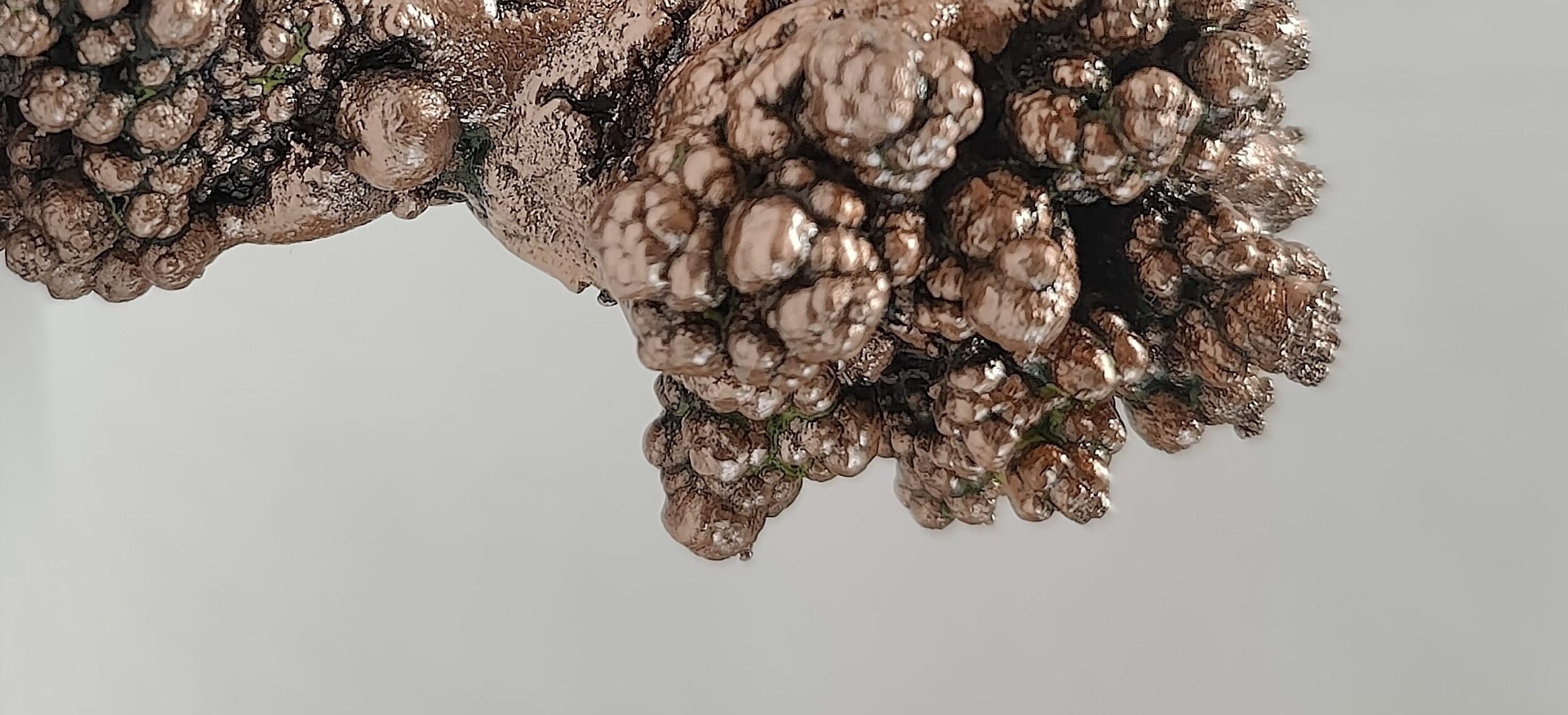
That instinct is where Undulating Husk came from. Sculptural objects in metal, forms designed to be cradled, forms that won’t mend, won’t leave and won’t ever look how they were. Memory vessels for stabilised trauma. The thing that was rotting, fixed into a form so the decay can’t finish the job. Make the perishable permanent to hold what should have been gone.
Maybe the gardens of my childhood didn’t just shape what I grow now, but how I remember, stubborn fragments, rich colours, decline without denial.
That’s the beauty of decline: it doesn’t let you pretend. Decline shows you what remains.
That’s the thing about flowers. They never stay flowers. Sometimes they turn into gods. In the dusk if you look hard enough, the stems look skeletal, a gathered crowd swaying in the evening light. The petals gone, but a kind of face remains, watching, waiting. Last time I went to Rhossili I thought of my father, not really gone but transposed, after all energy never dies.
Together they form a crooked court of the natural world, part chorus, part predator, part archivist, part judge. They don’t bless. They don’t save. They don’t forgive. They remind. They remain. They watch. They bleed. They interrupt.
So what do the gardens of your childhood say about who you are now? Careful with your answer. The flowers might correct you.
Rot with a witness isn’t failure. It’s the last thing care does.
— WRITTEN BY THE ONE WHO STAYED FOR THE ROT.