🔥⚱️ Forged in Pandemonium: the Concept Pieces
This text was written as a companion to Mutation Quartet. It is proof of what can be made when there’s no one dictating what’s worth marking based on ease for them. This text was not provided to the Royal College of Art, as I chose not to provide too many texts and clutter my application, but the work was provided in the portfolio.
These pieces mark the beginning of my journey beyond the confines of university, a dive into creative freedom where I could produce whatever the fuck I wanted on whatever terms I saw fit.
They were explorations of what jewellery could be under my own thought process, where I entertain my own wants and aesthetics only. They are conceptual representations designed to capture the idea of adornment without the constraints of practicality or demand for oversized statement pieces, the kind that make the point of the project almost redundant because the tutors want size, to satisfy the ‘bigger is better’ crap that was pushed at uni under the covert ‘scale is important’ line which always meant you had to go bigger. For maybe the first time in a long time, I was experimenting entirely on my terms, playing with shape, size, form, technique and skills without anyone else’s opinions shaping the outcome they considered correct.
To bring these concept pieces to life, I used a combination of materials and techniques that allowed for complete creative freedom. The base for each piece was crafted in wax, a medium that offers endless possibilities.
From there, I experimented with various tools and methods, layering texture and carving depth to create forms that felt alive and dynamic.
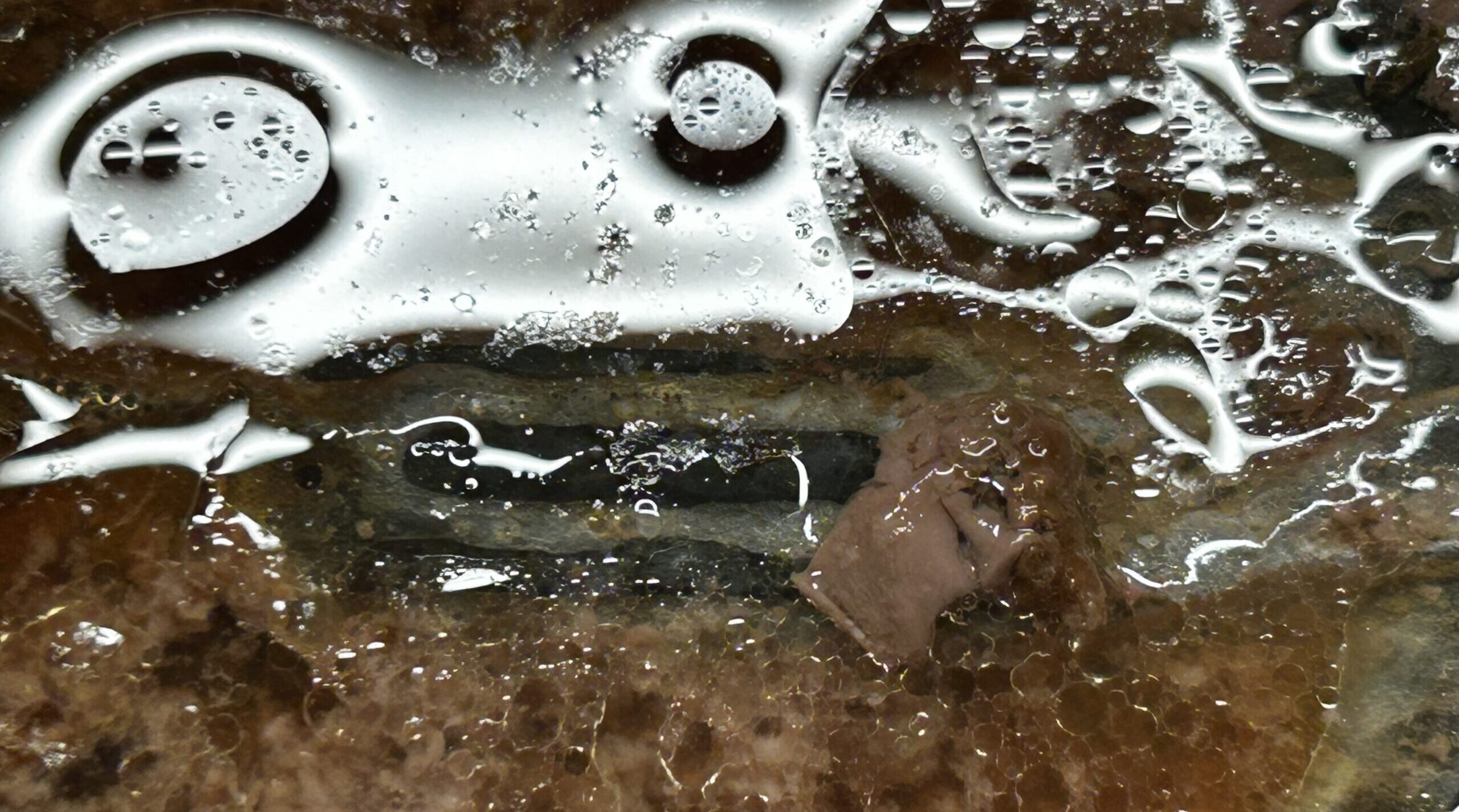
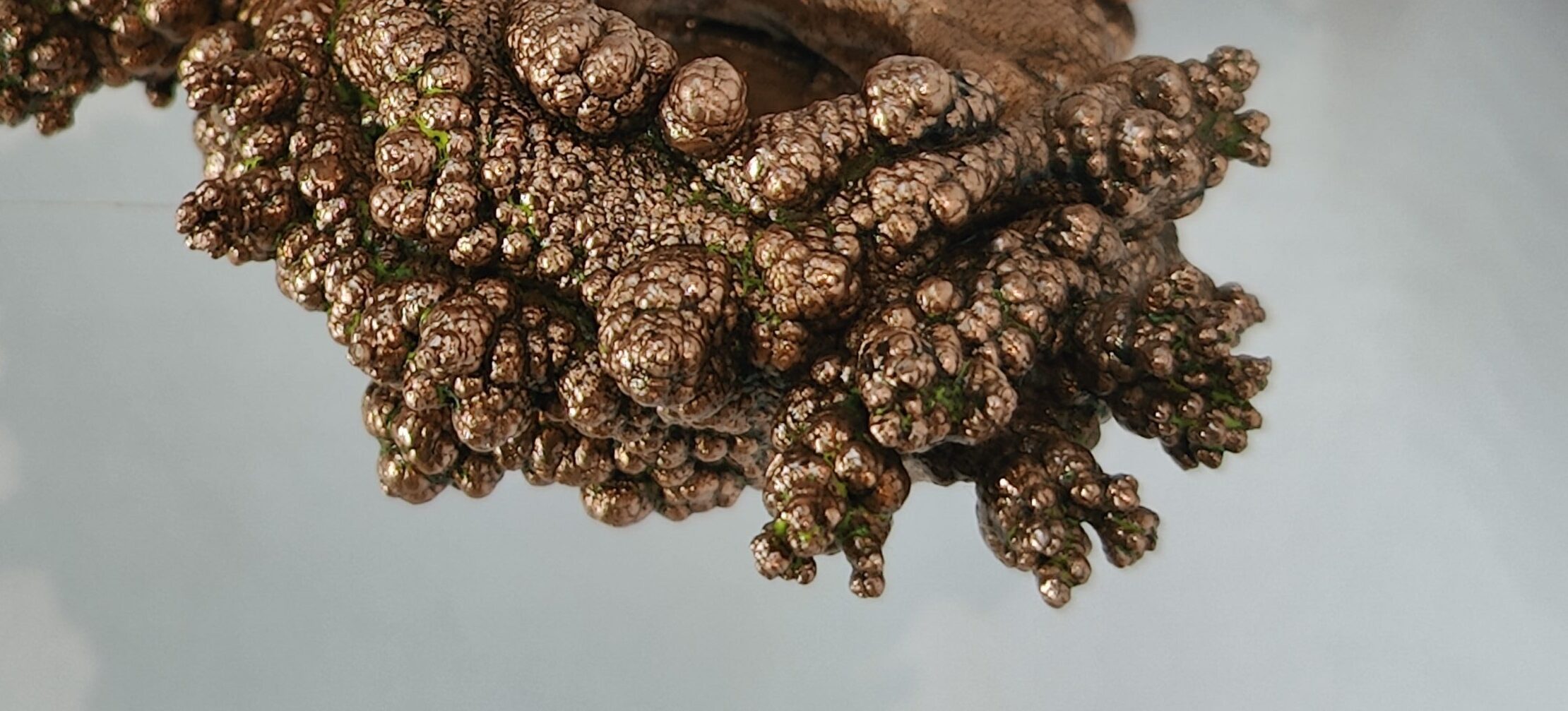
- Texturing and carving tools: I used these to sculpt both delicate and bold patterns, exploring contrasts that made each piece feel like it was growing. One standout effect was a bubbly texture, which added an almost effervescent quality to the surface. When translated into the final electroformed piece, this effect gave the design a striking, tactile finish.
- Heat pen: This tool became invaluable for creating smooth, melted textures with a sense of movement. The slight drips it left behind gave each piece a fluid, natural form, reminiscent of molten metal or flowing water, adding an organic element that felt both deliberate and spontaneous.
- Coarse sandpaper and needle files: By layering different grits of sandpaper and files, I introduced a rich variety of textures, from gritty, weathered areas to sharp, defined lines. These layers created visual and tactile depth, giving each piece a raw yet refined character.
- Textured materials: Sand, beads, and other materials were pressed into the wax to add unique surface qualities and dimension. The beads, in particular, played a significant role, not just as a texturing tool but as a design element that became prominent in the final look, blending texture and form seamlessly.
- Experimentation with clay, putty, and more: Beyond wax, I incorporated materials like clay and putty to push the boundaries of what these pieces could be. Layering these mediums allowed me to enrich the designs further, adding intricate details and creating unexpected contrasts in texture and structure.
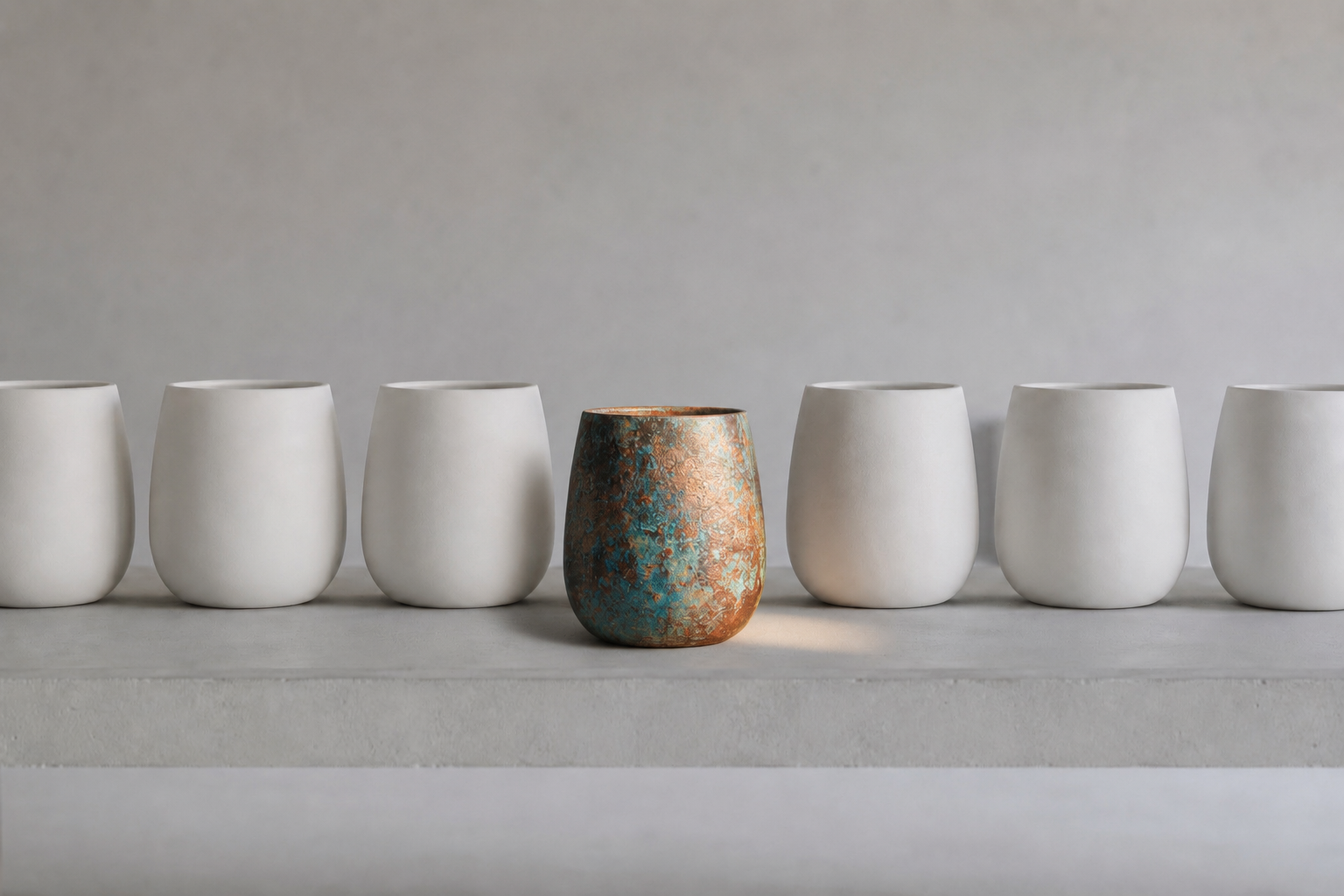
Each twist, bubble, bead, and texture in these little but mighty copper forms tells a story, a fragment of the mental health struggles I was navigating at the time. My creative process mirrored the fuck it and find out chaos within. These pieces were as messy and sometimes frustrating as untangling a knotted ball of necklaces you’re at peak level, end of my tether, with and borderline ripping off your neck and binning as an oppsie. Translating raw, unfiltered emotions into something tangible became a deeply cathartic experience, turning that pain and complexity into tangible pieces that felt both honest and transformative, for the first time in a long time these pieces were mine. A reflection of what I could do.
These pieces were the reason I went to university in the first place. In my first year, I was finding my feet, learning the basics, exploring techniques, and starting to understand what I could do with them. It was an exciting time, full of potential and curiosity, cheesy as fuck I know, but my first year tutors were amazing, nothing you did was wrong and everything was a learning point. But, I now realise how limited the scope of that first year was in relation to what followed.
In the first year we were never even introduced to materials like wax or the possibilities of incorporating ‘odd’ or unconventional elements. Electroforming? Nah, no chance, never even heard of it. There was so much more to experiment with, so much more to learn and explore. Where the second year should have progressed beyond those first year skills, the tutors that took over instead essentially forced us backwards into uninspiring, and in all honesty, toddler exercises, like crayon squiggles masquerading as ‘movement’ on large sheets of paper on the floor. Even when it came to selecting modules we were restricted. I wanted to do the narrative module in my last year because I love conjuring a good narrative, I’m defo not the next best seller but I can wack a good story behind my work. But I was told there were only two of us interested, so it wasn’t worth marking, and we were both put on the other project instead. More on this to come when I look back on my uni experience.
I produced work throughout that year for modules I hated, and it didn’t work because I wasn’t producing for me. I was producing to somebody else’s specs, because they wanted people to do what they wanted. It was anxiety, that idea of going in with an idea and then getting pushed to the side because it doesn’t meet what they want you to do. They don’t like the idea, or they don’t think you can do it, so they try and steer you away from it, or they tell you it doesn’t work so they move on.
All the excitement I felt during the first year, the anticipation of what the second year might bring, fizzled out far too quickly. These pieces, or at least their equivalents, should have been my second- or third-year projects, pushing boundaries and challenging conventions in my own way. Instead, it took leaving university with a pointless degree and a wealth of unlearned skills for me to finally create work that felt true to my vision and motivations.
Nobody was marking it. That’s when it got good.
— WRITTEN BY THE ONE WHO LEFT TO FINALLY MAKE THE WORK.